Friday, October 30, 2015

Lastest Chinese Prototyping Companies News

Tiny Chinese mold makers struggling

Firms exhibiting included the Chinese branches of U.S. heavyweights 3D Systems Inc. and Stratasys Ltd. Judging from the myriad action figures on show in tiny booths, though, most of the exhibitors were targeting the hobbyist, art-college and low-price&nbsp…
Study much more on Plastics News


Meet the man in charge of your &#39Made in China&#39 tech

Now, the organization indirectly employs 30,000 industrial workers in China – as effectively as 5000 employees in Shenzhen – to make best-good quality consumer electronics, medical, telecom and other technologies merchandise for tech giants such as Apple, Beats by Dre, Nook,&nbsp…
Study much more on Organization Insider


Eugene cycling tour de force

Then in 1992, the Scholz brothers founded Green Gear, the parent company of the Bike Friday folding travel bike. …. In the United States we cleaned up a lot of water and air and stuff China is now going by way of what we did after World War II …
Study much more on The Register-Guard


(Source from China rapid prototype company blog)

Thursday, October 29, 2015

Lastest Chinese Prototype Companies News

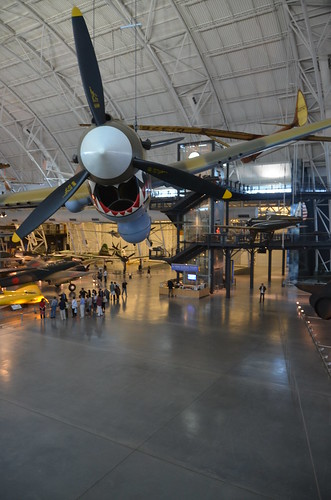
Steven F. Udvar-Hazy Center: principal hall panorama (SR-71, Space Shuttle, et al)
chinese prototype manufacturers
Image by Chris Devers
See far more photos of this, and the Wikipedia article.


Particulars, quoting from Smithsonian National Air and Space Museum | Lockheed SR-71 Blackbird:


No reconnaissance aircraft in history has operated globally in more hostile airspace or with such full impunity than the SR-71, the world’s quickest jet-propelled aircraft. The Blackbird’s efficiency and operational achievements placed it at the pinnacle of aviation technologies developments during the Cold War.


This Blackbird accrued about 2,800 hours of flight time for the duration of 24 years of active service with the U.S. Air Force. On its last flight, March six, 1990, Lt. Col. Ed Yielding and Lt. Col. Joseph Vida set a speed record by flying from Los Angeles to Washington, D.C., in 1 hour, 4 minutes, and 20 seconds, averaging 3,418 kilometers (two,124 miles) per hour. At the flight’s conclusion, they landed at Washington-Dulles International Airport and turned the airplane more than to the Smithsonian.


Transferred from the United States Air Force.


Manufacturer:
Lockheed Aircraft Corporation


Designer:
Clarence L. &quotKelly&quot Johnson


Date:

1964


Nation of Origin:

United States of America


Dimensions:

General: 18ft 5 15/16in. x 55ft 7in. x 107ft 5in., 169998.5lb. (5.638m x 16.942m x 32.741m, 77110.8kg)

Other: 18ft 5 15/16in. x 107ft 5in. x 55ft 7in. (5.638m x 32.741m x 16.942m)


Supplies:

Titanium


Physical Description:

Twin-engine, two-seat, supersonic strategic reconnaissance aircraft airframe constructed largley of titanium and its alloys vertical tail fins are constructed of a composite (laminated plastic-sort material) to decrease radar cross-section Pratt and Whitney J58 (JT11D-20B) turbojet engines function huge inlet shock cones.


• • • • •


See far more photographs of this, and the Wikipedia article.


Details, quoting from Smithsonian National Air and Space Museum | Space Shuttle Enterprise:


Manufacturer:
Rockwell International Corporation


Country of Origin:

United States of America


Dimensions:

General: 57 ft. tall x 122 ft. extended x 78 ft. wing span, 150,000 lb.

(1737.36 x 3718.57 x 2377.44cm, 68039.6kg)


Components:

Aluminum airframe and body with some fiberglass functions payload bay doors are graphite epoxy composite thermal tiles are simulated (polyurethane foam) except for test samples of actual tiles and thermal blankets.


The first Space Shuttle orbiter, &quotEnterprise,&quot is a full-scale test vehicle used for flights in the atmosphere and tests on the ground it is not equipped for spaceflight. Even though the airframe and flight control components are like those of the Shuttles flown in space, this vehicle has no propulsion technique and only simulated thermal tiles because these characteristics have been not necessary for atmospheric and ground tests. &quotEnterprise&quot was rolled out at Rockwell International’s assembly facility in Palmdale, California, in 1976. In 1977, it entered service for a nine-month-lengthy approach-and-landing test flight system. Thereafter it was utilised for vibration tests and match checks at NASA centers, and it also appeared in the 1983 Paris Air Show and the 1984 World’s Fair in New Orleans. In 1985, NASA transferred &quotEnterprise&quot to the Smithsonian Institution’s National Air and Space Museum.


Transferred from National Aeronautics and Space Administration


China&#39s Silicon Delta

Ample engineering talent and fast logistics help the progress from prototype to item – as does plentiful spending on study and improvement. In 2013, Shenzhen spent RMB58 billion, or 4 per cent of the municipality&#39s GDP, on study and improvement …
Read far more on I-Connect007


PV Backsheet Firm BioSolar Makes Bold Claims About Its New &#39Super Battery

“By integrating BioSolar&#39s higher capacity, higher power and low-price cathode with traditional anodes, which fit current battery manufacturing processes and infrastructure, manufacturers can hopefully develop a super lithium-ion battery that can double …
Study much more on Greentech Media


(Source from China rapid prototype company blog)

Wednesday, October 28, 2015

Nice Prototype Factory In China photographs

Verify out these prototype factory in china pictures:


Japanese Tank Variety 95 Ha-Gō (九五式軽戦車 ハ号 Kyugoshiki keisensha Ha-Gō). 1935. Японский танк Тип 95 “Ха-Го”.
prototype factory in china
Image by Peer.Gynt

Poklonnaya Gora WWII Museum. Moscow.

Поклонная гора. Москва.


Specifications

Weight – 7,400 kilograms

Length – 4.38 m

Width – 2.06 meters

Height- two.18 meters

Crew – 3


Main armament Sort 94 37 mm gun

Secondary armament Kind 91 six.five mm machine gun or two x Kind 97 7.7 mm machine gun

Engine Mitsubishi NVD 6120 air-cooled diesel 120 hp (89 kW)

Suspension Bell crank

Operational range250 kilometers

Speed 45 km/h (road)


The Type 95 Ha-Gō (九五式軽戦車 ハ号 Kyugoshiki keisensha Ha-Gō?) (also known as the Variety 97 Ke-Go) was a light tank employed by the Imperial Japanese Army in combat operations of the Second Sino-Japanese War and the Second World War. Despite the fact that it was really slow for a light tank, it proved sufficient against opposing infantry in campaigns in Manchuria and China, as the Chinese National Revolutionary Army had really couple of tanks or anti-tank weapons to oppose them. Nevertheless, the Kind 95 lacked the armor or armament of contemporary Allied tanks, and was regarded as obsolete by the begin of Planet War II. Much more than two,000 units were made. It was also employed by Imperial Japanese Navy SNLF detachments in Pacific locations in the course of conflict.

History and improvement


From early 1930s, the Japanese army started experimenting on a mechanized warfare unit combining infantry with tanks. Even so, the Variety 89 Medium tank could not hold pace with the motorized infantry, which could move at 40 km/h by truck. To solve this dilemma, the Army Technical Bureau proposed a new light tank at 40 km/h speed and began improvement in 1933. The prototype of the new tank was finished in 1934 at the Army’s Sagami Arsenal. It was a higher-speed and lightly-armored tank equivalent to the British cruiser tank or Soviet BT tank. Its code name was &quotHa-Gō&quot (ハ号) designated that it was the &quotthird kind&quot of tank created.[three]


In 1935, a meeting was held at the Army Technical Bureau, at which time, the Variety 95 was presented as a prospective principal battle tank for mechanized infantry units. The infantry had issues that the armor was not thick adequate for enough infantry assistance even so, the cavalry indicated that the improved speed and armaments compensated for this thin armor. In the end, the infantry agreed, as the Sort 95 was still superior to the only obtainable option, which was the armored automobile.


Production was started in 1935 by Mitsubishi Heavy Industries. By 1939, one hundred units had been constructed. Mitsubishi would go on to develop a total of 853 in their personal factories, with an additional 1250 units built by the Sagami Arsenal, Hitachi Industries, Niigata Tekkoshō, Kobe Seikoshō, and Kokura Arsenal.[two]


Type 95 Ha-Go tanks in New Britain following the Japanese surrender


Type 95 on show at the United States Army Ordnance Museum, front view


Proper side view.


Type 95 at Tarawa


The Sort 95 was a major improvement more than the Japanese Army’s prior light tanks and tankettes, but was quickly involved in an intensive plan to create improved variants such as the Manshū model (Kind M), the Ha-Gō’s direct descendant. Variety M was technically identical but created for use in the Kwantung Army’s tank schools in Manchukuo and it was planned to be supplied in far a lot more numbers to future Manchukuo Imperial Army armored units and was projected to be manufactured in that nation.


Another development was the Kind 98 Ke-Ni light tank that entered production in 1942 of which 200 autos have been built. This derivitative was better armored and carried an armament comprising one particular Sort one hundred 37 mm gun and two 7.7 mm machine guns.


The Sort 95 also served as the basis of the Variety two Ka-Mi amphibious tank which gave good service in Japan’s early campaigns of Planet War II.


[edit]

Design and style


The Kind 95 was a 7.4-ton vehicle with a complement of 3 crewmen (generally a commander/gunner/loader, mechanic/bow machine gunner, and a driver).


The major armament was one particular Type 94 37 mm Tank Gun with 37 mm caliber, barrel length of 1.3585 meters (L36.7) (early model), 1.358 meters (L36.7) (late model), el angle of fire -15 to +20 degrees (early model), -15 to +20 degrees (late model), AZ angle of fire of 20 degrees (early model) 20 degrees (late model), muzzle velocity: 600 m/s (early model), 700 m/s (late model), penetration: 45 mm/300 m (early model) 25 mm/500 m (late model) utilized by the Variety 95 Light Tank. The commander was accountable for loading, aiming, and firing the primary gun, The Variety 95 tank carried two sorts of ammunition, Variety 94 higher-explosive and Kind 94 armor-piercing.


Secondary armament consisted as two Type 91 six.5mm machine guns, 1 mounted in the hull and the other in the turret facing to the rear. Trial use in Manchukuo and China confirmed that far better armament was desirable and the 6.5mm machine guns had been exchanged for far more effective 7.7mm Kind 97 light machine guns on the proper hand side, for use by the currently overworked commander/gunner in 1941. The original Kind 94 principal gun was also replaced with a Sort 98 weapon of the very same caliber but with a larger muzzle velocity.


The hand-operated turret was tiny and incredibly cramped for even the 1 crewman typically located there (the commander), and was only getting in a position to rotate in a 45 degree forward arc, leaving the back to be covered by the rear-facing machine gun which failed to compensate for this significant disadvantage.


The most characteristic function of the Sort 95 tank was its simple suspension method. The tracks had been driven through the front sprocket. Two bogie wheels had been suspended on a single bell crank with two bell cranks per side. There had been two return wheels. The suspension had troubles early on with a tendency to pitch so badly on rough ground that the crew occasionally located it impossible to drive at any speed, and so it was modified with a brace to connect the pairs of bogies. Regardless of this, the tank continued to give its customers a rough ride across any uneven ground, and was offered with an interior layer of asbestos, helpful in minimizing interior heat and guarding the crew from injury when the tank moved at high speed across rough terrain.[three]


This very first production models used one particular 110 hp (82 kW) Mitsubishi air cooled diesel engine with a top speed of 25 mph (40 km/h). This was the identical engine that equipped the Sort 89 I-Go medium tank. Later the far more potent engine Mitsubishi NVD 6120 with 120 hp (89.five kW) was installed.[3] Some Variety 95 were fitted with two reflectors in the front of the vehicle for evening operations.


[edit]

Variants


Variety 95 tank in Bovington tank museum, Dorset


Type 95 on show at the Battery Randolf US Army Museum, Honolulu, leading rear view


Kind 95 Ha-Go tanks destroyed by an Australian two pounder gun in the Battle of Muar


A single of six Ha-Go tanks destroyed by an Australian two pounder gun in the Battle of Muar. The escaping crew were killed by allied infantry covering the artillery

Type three Ke-Ri

This was a proposed model with a Kind 97 57 mm gun as the principal armament. This design never ever got past testing in 1943.

Type 4 Ke-Nu

The Sort 4 Ke-Nu was intended to address one particular of the most widespread complaints about the Type 95 from its users – the cramped turret. The existing Kind 95 turret was replaced by the turret of a Sort 97 Medium tank for much more space. About 100 units have been created.

Variety 95 Manshū

The Sort 95 Manshū was an operational and education tank derived from and really comparable to the Sort 95 Ha-Gō. These tanks have been detached to Manchukuo and belonged to the instruction unit of the Kwantung Army tank college.

Type 95 &quotTa-Se&quot Anti-Aircraft Tank

An experimental vehicle named &quotTa-Se&quot was constructed in November 1941, utilizing the chassis of Type 95 Ha-Gō with a 20 mm anti-aircraft gun taken from the Type 98 20 mm anti-aircraft gun. An additional version utilized a Type two 20 mm anti-aircraft gun. Neither model went into production.

Variety two Ka-Mi Amphibious Tank

This was the very first amphibious tank created in Japan, and was intended for use by the Navy’s SNLF. The pontoons could be detached following landing by a fourth crewman from inside the tank. The chassis was primarily based on the Kind 95 Light Tank. The Variety 2 Ka-Mi was encountered by the United States Marine Corps in the Marshall Islands and Mariana Islands, specifically on Guam, exactly where it was utilized in static defense positions.

Sort 95 &quotRi-Ki&quot Crane Car

The Kind 95 Ri-Ki was an engineering vehicle for field functions. It had a three-ton four.five meter boomed crane.

120 mm self-propelled gun &quotHo-To&quot

The Variety 95 Ho-To was a Variety 38 120 mm howitzer mounted on the Kind 95 Ha-Go chassis. The gun was low-velocity but the HEAT shell enabled it to destroy the American M4 Sherman tank. This self-propelled gun was created along with the Ho-Ru self-propelled gun.

Kind five Ho-Ru 47 mm self-propelled gun

The Ho-Ru was a light tank destroyer equivalent to the German Hetzer. The improvement of the Kind 5 Ho-Ru began in February 1945. The Type five Ho-Ru utilized the chassis of the Type 95 Light Tank, but its suspension was enlarged to 350 mm track hyperlink width. The wheel guide pins were set in two rows to hold a road wheel among them. The sprocket of the driving wheel was the grating kind to gear with the wheel guide pins like on the Soviet T-34. It was armed with one particular 47 mm main gun.

Sort 98 Ke-Ni light tank

This final modification was somewhat lighter than the original Sort 95, even with its heavier (.62 inch) armor. It entered production in 1942, but only about 200 were manufactured.


[edit]

Combat history


When the Variety 95 entered service in 1935 it was a capable machine and comparable to any modern light tank in the planet. It was the very best automobile of its category available to the Japanese forces in any numbers from the 1930s to World War II, and was used mainly to assistance infantry or as cavalry reconnaissance and, to a lesser extent, as raiding vehicles. It could compete with the American M3 light tanks on the Philippines, even though the British had very handful of tanks of any variety in Malaya or Burma in December 1941. [four]


The Type 95 Ha-Gō proved moderately profitable for the duration of the early campaigns of late 1941 and early 1942, when Japanese forces overran British Malaya and seized the fortress city of Singapore. A single crucial to the Japanese good results in Malaya was the unexpected presence of their tanks in locations exactly where the British did not think tanks could be employed. The wet jungle terrain did not turn out to be an obstacle twelve Sort 95s took portion in the attack which broke the Jitra line on 11 December 1941.


The very first tank-vs-tank battles of the war was on 22 December 1941 for the duration of the Japanese invasion of the Philippines. Type 95s of the 4th Tank Regiment clashed with M3s of the American 192nd Tank Battalion. Each tanks have been armed with a 37 mm gun, and the M3 was far better armored however, the inexperienced American commanders failed to make very good use of their tanks.


Two Sort 95 tanks have been deployed to assistance the Japanese landing at Milne Bay, late August 1942. Initially, the tanks proved profitable against the lightly armed Australian infantry, whose ‘sticky bombs’ failed to stick due to the humidity. Even though the tanks had proved dependable in the tropical conditions of Malaya, they could not deal with the volume of mud brought on by intense, practically everyday rainfall at Milne Bay. Both tanks had been bogged down and abandoned a couple of days after the landing.


The Type 95 very first started to show its vulnerability during later battles against British/Commonwealth forces, where the tank’s 37mm gun could not penetrate the armor of the British Matilda tanks which had been deployed against them. The thin armor of the Type 95 created it increasingly vulnerable as Allied forces realized that common infantry weapons have been capable of penetrating the minimal armor around the engine block, and even its thickest armor could not withstand something above rifle caliber. Its firepower was insufficient to take on other tanks such as the medium M4 Sherman or the M3 Stuart light tanks. [four]


As the tide of the war turned against Japan, the Kind 95s have been growing expended in banzai charges or had been dug-in as pillboxes in static defense positions in the Japanese-occupied islands. Throughout the Battle of Tarawa, seven entrenched Kind 95th opposed American landings. More were destroyed on Parry Island and on Eniwetok. On Saipan, Type 95s attacked the American Marine beachhead on 16 June 1944 and much more have been utilized in the largest tank battle in the Pacific the following day.


In the Battle of Guam on 21 July, ten Kind 95 had been lost to bazooka fire or M4 tanks. Seven far more have been destroyed on Tinian on 24 July, and 15 more on Battle of Peleliu on 15 September. Likewise, in the Philippines, at least ten Sort 95s have been destroyed in different engagements on Leyte, and one more 19 on Luzon. At the Battle of Okinawa, 13 Type 95s and 14 Variety 97 Shihoto medium tanks of the 27th Tank Regiment faced 800 American tanks.


When the war ended hundreds of Type 95s have been left in China. They were used during the Chinese Civil War and by the People’s Liberation Army of the People’s Republic of China in the course of the Korean War.


(Source from China rapid prototype company blog)

Lastest Prototype Cnc Machining China News

China Shakes Up ARM Servers

CUPERTINO, Calif. – A China-primarily based startup described at the annual Hot Chips occasion right here the most aggressive ARM-based server processor to date. In the same session, Oracle described its initial Sparc processor with integrated Infiniband. Little known&nbsp…
Read much more on EE Occasions


News &amp Analysis Taiwan May Ease Guidelines on Chip Investments in China

TAIPEI — The Taiwan government might soon ease regulations to help neighborhood chipmakers get a larger slice of the semiconductor business in China. The draft regulations would let Taiwan chipmakers have sole ownership of any new 12-inch fabs that they&nbsp…
Study far more on EE Occasions


China Server Upstart Hits Spotlight

SAN JOSE, Calif. — Phytium Technologies Co. Ltd. went from getting an unknown to the equivalent of a rock star in the microprocessor planet last week. That&#39s when the China-primarily based firm disclosed information at the annual Hot Chips occasion of its Mars design,&nbsp…
Study a lot more on EE Instances


(Source from China rapid prototype company blog)

Monday, October 26, 2015

Japanese Tank Type 95 Ha-Gō (九五式軽戦車 ハ号 Kyugoshiki keisensha Ha-Gō). 1935. Японский танк Тип 95 "Ха-Го".

Some cool chinese prototype manufacturing photos:


Japanese Tank Variety 95 Ha-Gō (九五式軽戦車 ハ号 Kyugoshiki keisensha Ha-Gō). 1935. Японский танк Тип 95 “Ха-Го”.
chinese prototype manufacturing
Image by Peer.Gynt

Kubinka Tank Museum. Танковый музей в Кубинке.


Specifications

Weight – 7,400 kilograms

Length – four.38 m

Width – two.06 meters

Height- two.18 meters

Crew – three


Main armament Type 94 37 mm gun

Secondary armament Variety 91 6.five mm machine gun or 2 x Kind 97 7.7 mm machine gun

Engine Mitsubishi NVD 6120 air-cooled diesel 120 hp (89 kW)

Suspension Bell crank

Operational range250 kilometers

Speed 45 km/h (road)


The Variety 95 Ha-Gō (九五式軽戦車 ハ号 Kyugoshiki keisensha Ha-Gō?) (also identified as the Type 97 Ke-Go) was a light tank used by the Imperial Japanese Army in combat operations of the Second Sino-Japanese War and the Second World War. Although it was very slow for a light tank, it proved adequate against opposing infantry in campaigns in Manchuria and China, as the Chinese National Revolutionary Army had very few tanks or anti-tank weapons to oppose them. However, the Sort 95 lacked the armor or armament of contemporary Allied tanks, and was regarded as obsolete by the start off of Globe War II. Much more than 2,000 units have been developed. It was also employed by Imperial Japanese Navy SNLF detachments in Pacific areas throughout conflict.

History and development


From early 1930s, the Japanese army began experimenting on a mechanized warfare unit combining infantry with tanks. Even so, the Variety 89 Medium tank could not keep pace with the motorized infantry, which could move at 40 km/h by truck. To solve this difficulty, the Army Technical Bureau proposed a new light tank at 40 km/h speed and started development in 1933. The prototype of the new tank was finished in 1934 at the Army’s Sagami Arsenal. It was a higher-speed and lightly-armored tank equivalent to the British cruiser tank or Soviet BT tank. Its code name was &quotHa-Gō&quot (ハ号) designated that it was the &quotthird type&quot of tank created.[3]


In 1935, a meeting was held at the Army Technical Bureau, at which time, the Type 95 was presented as a potential primary battle tank for mechanized infantry units. The infantry had issues that the armor was not thick sufficient for enough infantry support however, the cavalry indicated that the improved speed and armaments compensated for this thin armor. In the end, the infantry agreed, as the Sort 95 was nevertheless superior to the only accessible alternative, which was the armored automobile.


Production was began in 1935 by Mitsubishi Heavy Industries. By 1939, one hundred units had been constructed. Mitsubishi would go on to create a total of 853 in their own factories, with an additional 1250 units built by the Sagami Arsenal, Hitachi Industries, Niigata Tekkoshō, Kobe Seikoshō, and Kokura Arsenal.[two]


Sort 95 Ha-Go tanks in New Britain following the Japanese surrender


Variety 95 on show at the United States Army Ordnance Museum, front view


Proper side view.


Variety 95 at Tarawa


The Kind 95 was a key improvement over the Japanese Army’s earlier light tanks and tankettes, but was soon involved in an intensive system to produce improved variants such as the Manshū model (Sort M), the Ha-Gō’s direct descendant. Type M was technically identical but created for use in the Kwantung Army’s tank schools in Manchukuo and it was planned to be offered in far much more numbers to future Manchukuo Imperial Army armored units and was projected to be manufactured in that nation.


Yet another improvement was the Variety 98 Ke-Ni light tank that entered production in 1942 of which 200 autos had been constructed. This derivitative was greater armored and carried an armament comprising 1 Kind 100 37 mm gun and two 7.7 mm machine guns.


The Type 95 also served as the basis of the Type two Ka-Mi amphibious tank which gave very good service in Japan’s early campaigns of Planet War II.


[edit]

Style


The Sort 95 was a 7.four-ton automobile with a complement of three crewmen (generally a commander/gunner/loader, mechanic/bow machine gunner, and a driver).


The major armament was a single Sort 94 37 mm Tank Gun with 37 mm caliber, barrel length of 1.3585 meters (L36.7) (early model), 1.358 meters (L36.7) (late model), el angle of fire -15 to +20 degrees (early model), -15 to +20 degrees (late model), AZ angle of fire of 20 degrees (early model) 20 degrees (late model), muzzle velocity: 600 m/s (early model), 700 m/s (late model), penetration: 45 mm/300 m (early model) 25 mm/500 m (late model) utilized by the Kind 95 Light Tank. The commander was accountable for loading, aiming, and firing the primary gun, The Type 95 tank carried two varieties of ammunition, Variety 94 higher-explosive and Kind 94 armor-piercing.


Secondary armament consisted as two Sort 91 6.5mm machine guns, one particular mounted in the hull and the other in the turret facing to the rear. Trial use in Manchukuo and China confirmed that greater armament was desirable and the 6.5mm machine guns were exchanged for a lot more powerful 7.7mm Sort 97 light machine guns on the appropriate hand side, for use by the currently overworked commander/gunner in 1941. The original Sort 94 main gun was also replaced with a Sort 98 weapon of the very same caliber but with a higher muzzle velocity.


The hand-operated turret was tiny and extremely cramped for even the a single crewman usually located there (the commander), and was only becoming able to rotate in a 45 degree forward arc, leaving the back to be covered by the rear-facing machine gun which failed to compensate for this significant disadvantage.


The most characteristic feature of the Sort 95 tank was its easy suspension program. The tracks have been driven through the front sprocket. Two bogie wheels had been suspended on a single bell crank with two bell cranks per side. There had been two return wheels. The suspension had troubles early on with a tendency to pitch so badly on rough ground that the crew occasionally discovered it impossible to drive at any speed, and so it was modified with a brace to connect the pairs of bogies. In spite of this, the tank continued to give its customers a rough ride across any uneven ground, and was supplied with an interior layer of asbestos, useful in minimizing interior heat and defending the crew from injury when the tank moved at higher speed across rough terrain.[three]


This first production models utilized 1 110 hp (82 kW) Mitsubishi air cooled diesel engine with a leading speed of 25 mph (40 km/h). This was the identical engine that equipped the Type 89 I-Go medium tank. Later the much more effective engine Mitsubishi NVD 6120 with 120 hp (89.5 kW) was installed.[3] Some Sort 95 have been fitted with two reflectors in the front of the automobile for evening operations.


[edit]

Variants


Sort 95 tank in Bovington tank museum, Dorset


Sort 95 on show at the Battery Randolf US Army Museum, Honolulu, best rear view


Sort 95 Ha-Go tanks destroyed by an Australian 2 pounder gun in the Battle of Muar


1 of six Ha-Go tanks destroyed by an Australian two pounder gun in the Battle of Muar. The escaping crew have been killed by allied infantry covering the artillery

Variety three Ke-Ri

This was a proposed model with a Kind 97 57 mm gun as the primary armament. This design and style by no means got past testing in 1943.

Variety 4 Ke-Nu

The Sort four Ke-Nu was intended to address one of the most common complaints about the Kind 95 from its users – the cramped turret. The existing Type 95 turret was replaced by the turret of a Variety 97 Medium tank for a lot more space. Approximately 100 units were produced.

Variety 95 Manshū

The Type 95 Manshū was an operational and coaching tank derived from and very related to the Kind 95 Ha-Gō. These tanks have been detached to Manchukuo and belonged to the instruction unit of the Kwantung Army tank college.

Type 95 &quotTa-Se&quot Anti-Aircraft Tank

An experimental car named &quotTa-Se&quot was constructed in November 1941, using the chassis of Sort 95 Ha-Gō with a 20 mm anti-aircraft gun taken from the Type 98 20 mm anti-aircraft gun. Another version used a Type two 20 mm anti-aircraft gun. Neither model went into production.

Kind two Ka-Mi Amphibious Tank

This was the initial amphibious tank created in Japan, and was intended for use by the Navy’s SNLF. The pontoons could be detached right after landing by a fourth crewman from inside the tank. The chassis was based on the Type 95 Light Tank. The Type 2 Ka-Mi was encountered by the United States Marine Corps in the Marshall Islands and Mariana Islands, specifically on Guam, exactly where it was utilised in static defense positions.

Sort 95 &quotRi-Ki&quot Crane Automobile

The Sort 95 Ri-Ki was an engineering automobile for field functions. It had a 3-ton 4.five meter boomed crane.

120 mm self-propelled gun &quotHo-To&quot

The Variety 95 Ho-To was a Variety 38 120 mm howitzer mounted on the Variety 95 Ha-Go chassis. The gun was low-velocity but the HEAT shell enabled it to destroy the American M4 Sherman tank. This self-propelled gun was created along with the Ho-Ru self-propelled gun.

Type five Ho-Ru 47 mm self-propelled gun

The Ho-Ru was a light tank destroyer equivalent to the German Hetzer. The improvement of the Variety 5 Ho-Ru began in February 1945. The Type five Ho-Ru utilized the chassis of the Sort 95 Light Tank, but its suspension was enlarged to 350 mm track link width. The wheel guide pins had been set in two rows to hold a road wheel among them. The sprocket of the driving wheel was the grating type to gear with the wheel guide pins like on the Soviet T-34. It was armed with one 47 mm primary gun.

Type 98 Ke-Ni light tank

This final modification was somewhat lighter than the original Variety 95, even with its heavier (.62 inch) armor. It entered production in 1942, but only about 200 were manufactured.


[edit]

Combat history


When the Kind 95 entered service in 1935 it was a capable machine and comparable to any modern light tank in the globe. It was the greatest vehicle of its category accessible to the Japanese forces in any numbers from the 1930s to World War II, and was utilized mostly to help infantry or as cavalry reconnaissance and, to a lesser extent, as raiding automobiles. It could compete with the American M3 light tanks on the Philippines, while the British had really couple of tanks of any sort in Malaya or Burma in December 1941. [four]


The Kind 95 Ha-Gō proved moderately effective in the course of the early campaigns of late 1941 and early 1942, when Japanese forces overran British Malaya and seized the fortress city of Singapore. One particular key to the Japanese accomplishment in Malaya was the unexpected presence of their tanks in locations exactly where the British did not think tanks could be employed. The wet jungle terrain did not turn out to be an obstacle twelve Type 95s took part in the attack which broke the Jitra line on 11 December 1941.


The very first tank-vs-tank battles of the war was on 22 December 1941 during the Japanese invasion of the Philippines. Kind 95s of the 4th Tank Regiment clashed with M3s of the American 192nd Tank Battalion. Both tanks were armed with a 37 mm gun, and the M3 was far better armored nevertheless, the inexperienced American commanders failed to make great use of their tanks.


Two Variety 95 tanks have been deployed to support the Japanese landing at Milne Bay, late August 1942. Initially, the tanks proved profitable against the lightly armed Australian infantry, whose ‘sticky bombs’ failed to stick due to the humidity. Though the tanks had proved trustworthy in the tropical circumstances of Malaya, they could not deal with the volume of mud triggered by intense, virtually daily rainfall at Milne Bay. Each tanks had been bogged down and abandoned a couple of days soon after the landing.


The Variety 95 very first began to show its vulnerability during later battles against British/Commonwealth forces, exactly where the tank’s 37mm gun could not penetrate the armor of the British Matilda tanks which were deployed against them. The thin armor of the Sort 95 produced it increasingly vulnerable as Allied forces realized that common infantry weapons have been capable of penetrating the minimal armor about the engine block, and even its thickest armor could not withstand anything above rifle caliber. Its firepower was insufficient to take on other tanks such as the medium M4 Sherman or the M3 Stuart light tanks. [four]


As the tide of the war turned against Japan, the Sort 95s had been rising expended in banzai charges or had been dug-in as pillboxes in static defense positions in the Japanese-occupied islands. In the course of the Battle of Tarawa, seven entrenched Kind 95th opposed American landings. More were destroyed on Parry Island and on Eniwetok. On Saipan, Kind 95s attacked the American Marine beachhead on 16 June 1944 and a lot more were employed in the biggest tank battle in the Pacific the following day.


In the Battle of Guam on 21 July, ten Variety 95 had been lost to bazooka fire or M4 tanks. Seven more had been destroyed on Tinian on 24 July, and 15 far more on Battle of Peleliu on 15 September. Likewise, in the Philippines, at least ten Variety 95s had been destroyed in a variety of engagements on Leyte, and an additional 19 on Luzon. At the Battle of Okinawa, 13 Kind 95s and 14 Variety 97 Shihoto medium tanks of the 27th Tank Regiment faced 800 American tanks.


When the war ended hundreds of Variety 95s had been left in China. They had been utilized throughout the Chinese Civil War and by the People’s Liberation Army of the People’s Republic of China for the duration of the Korean War.


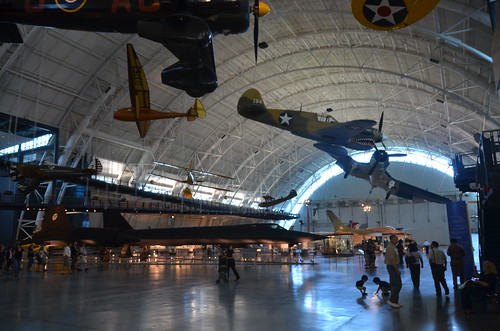
Steven F. Udvar-Hazy Center: Profile view of the SR-71 Blackbird, F-4 Corsair, P-40 Warhawk, amongst other individuals
chinese prototype manufacturing
Image by Chris Devers

Quoting Smithsonian National Air and Space Museum | Curtiss P-40E Warhawk (Kittyhawk IA):


Whether recognized as the Warhawk, Tomahawk, or Kittyhawk, the Curtiss P-40 proved to be a profitable, versatile fighter throughout the initial half of Planet War II. The shark-mouthed Tomahawks that Gen. Claire Chennault’s &quotFlying Tigers&quot flew in China against the Japanese remain among the most popular airplanes of the war. P-40E pilot Lt. Boyd D. Wagner became the 1st American ace of Planet War II when he shot down six Japanese aircraft in the Philippines in mid-December 1941.


Curtiss-Wright built this airplane as Model 87-A3 and delivered it to Canada as a Kittyhawk I in 1941. It served until 1946 in No. 111 Squadron, Royal Canadian Air Force. U.S. Air Force personnel at Andrews Air Force Base restored it in 1975 to represent an aircraft of the 75th Fighter Squadron, 23rd Fighter Group, 14th Air Force.


Donated by the Exchange Club in Memory of Kellis Forbes.


Manufacturer:
Curtiss Aircraft Business


Date:

1939


Country of Origin:

United States of America


Dimensions:

General: 330 x 970cm, 2686kg, 1140cm (10ft 9 15/16in. x 31ft 9 7/8in., 5921.6lb., 37ft 4 13/16in.)


Components:

All-metal, semi-monocoque


Physical Description:

Single engine, single seat, fighter aircraft.


• • • • •


Quoting Smithsonian National Air and Space Museum | Lockheed SR-71 Blackbird:


No reconnaissance aircraft in history has operated globally in far more hostile airspace or with such full impunity than the SR-71, the world’s fastest jet-propelled aircraft. The Blackbird’s efficiency and operational achievements placed it at the pinnacle of aviation technologies developments for the duration of the Cold War.


This Blackbird accrued about 2,800 hours of flight time in the course of 24 years of active service with the U.S. Air Force. On its final flight, March 6, 1990, Lt. Col. Ed Yielding and Lt. Col. Joseph Vida set a speed record by flying from Los Angeles to Washington, D.C., in 1 hour, 4 minutes, and 20 seconds, averaging three,418 kilometers (2,124 miles) per hour. At the flight’s conclusion, they landed at Washington-Dulles International Airport and turned the airplane more than to the Smithsonian.


Transferred from the United States Air Force.


Manufacturer:
Lockheed Aircraft Corporation


Designer:
Clarence L. &quotKelly&quot Johnson


Date:

1964


Nation of Origin:

United States of America


Dimensions:

All round: 18ft 5 15/16in. x 55ft 7in. x 107ft 5in., 169998.5lb. (five.638m x 16.942m x 32.741m, 77110.8kg)

Other: 18ft five 15/16in. x 107ft 5in. x 55ft 7in. (five.638m x 32.741m x 16.942m)


Components:

Titanium


Physical Description:

Twin-engine, two-seat, supersonic strategic reconnaissance aircraft airframe constructed largley of titanium and its alloys vertical tail fins are constructed of a composite (laminated plastic-sort material) to decrease radar cross-section Pratt and Whitney J58 (JT11D-20B) turbojet engines feature big inlet shock cones.


• • • • •


Quoting Smithsonian National Air and Space Museum | Vought F4U-1D Corsair :


By V-J Day, September 2, 1945, Corsair pilots had amassed an 11:1 kill ratio against enemy aircraft. The aircraft’s distinctive inverted gull-wing design permitted ground clearance for the huge, three-bladed Hamilton Regular Hydromatic propeller, which spanned a lot more than 4 meters (13 feet). The Pratt and Whitney R-2800 radial engine and Hydromatic propeller was the largest and one of the most strong engine-propeller combinations ever flown on a fighter aircraft.


Charles Lindbergh flew bombing missions in a Corsair with Marine Air Group 31 against Japanese strongholds in the Pacific in 1944. This airplane is painted in the colors and markings of the Corsair Sun Setter, a Marine close-support fighter assigned to the USS Essex in July 1944.


Transferred from the United States Navy.


Manufacturer:
Vought Aircraft Organization


Date:

1940


Country of Origin:

United States of America


Dimensions:

General: 460 x 1020cm, 4037kg, 1250cm (15ft 1 1/8in. x 33ft five 9/16in., 8900lb., 41ft 1/8in.)


Components:

All metal with fabric-covered wings behind the principal spar.


Physical Description:

R-2800 radial air-cooled engine with 1,850 horsepower, turned a three-blade Hamilton Standard Hydromatic propeller with strong aluminum blades spanning 13 feet 1 inch wing bent gull-shaped on both sides of the fuselage.


Steven F. Udvar-Hazy Center: Lockheed SR-71 Blackbird port panorama (F-4 Corsair & P-40 Warhawk overhead)
chinese prototype manufacturing
Image by Chris Devers
See more photographs of this, and the Wikipedia post.


Particulars, quoting from Smithsonian National Air and Space Museum | Curtiss P-40E Warhawk (Kittyhawk IA):


Whether recognized as the Warhawk, Tomahawk, or Kittyhawk, the Curtiss P-40 proved to be a profitable, versatile fighter throughout the 1st half of World War II. The shark-mouthed Tomahawks that Gen. Claire Chennault’s &quotFlying Tigers&quot flew in China against the Japanese stay among the most popular airplanes of the war. P-40E pilot Lt. Boyd D. Wagner became the initial American ace of World War II when he shot down six Japanese aircraft in the Philippines in mid-December 1941.


Curtiss-Wright built this airplane as Model 87-A3 and delivered it to Canada as a Kittyhawk I in 1941. It served until 1946 in No. 111 Squadron, Royal Canadian Air Force. U.S. Air Force personnel at Andrews Air Force Base restored it in 1975 to represent an aircraft of the 75th Fighter Squadron, 23rd Fighter Group, 14th Air Force.


Donated by the Exchange Club in Memory of Kellis Forbes.


Manufacturer:
Curtiss Aircraft Firm


Date:

1939


Nation of Origin:

United States of America


Dimensions:

General: 330 x 970cm, 2686kg, 1140cm (10ft 9 15/16in. x 31ft 9 7/8in., 5921.6lb., 37ft 4 13/16in.)


Materials:

All-metal, semi-monocoque


Physical Description:

Single engine, single seat, fighter aircraft.


• • • • •


See a lot more photos of this, and the Wikipedia report.


Particulars, quoting from Smithsonian National Air and Space Museum | Lockheed SR-71 Blackbird:


No reconnaissance aircraft in history has operated globally in much more hostile airspace or with such full impunity than the SR-71, the world’s quickest jet-propelled aircraft. The Blackbird’s functionality and operational achievements placed it at the pinnacle of aviation technologies developments for the duration of the Cold War.


This Blackbird accrued about two,800 hours of flight time throughout 24 years of active service with the U.S. Air Force. On its final flight, March six, 1990, Lt. Col. Ed Yielding and Lt. Col. Joseph Vida set a speed record by flying from Los Angeles to Washington, D.C., in 1 hour, four minutes, and 20 seconds, averaging three,418 kilometers (2,124 miles) per hour. At the flight’s conclusion, they landed at Washington-Dulles International Airport and turned the airplane over to the Smithsonian.


Transferred from the United States Air Force.


Manufacturer:
Lockheed Aircraft Corporation


Designer:
Clarence L. &quotKelly&quot Johnson


Date:

1964


Nation of Origin:

United States of America


Dimensions:

Overall: 18ft 5 15/16in. x 55ft 7in. x 107ft 5in., 169998.5lb. (5.638m x 16.942m x 32.741m, 77110.8kg)

Other: 18ft five 15/16in. x 107ft 5in. x 55ft 7in. (5.638m x 32.741m x 16.942m)


Materials:

Titanium


Physical Description:

Twin-engine, two-seat, supersonic strategic reconnaissance aircraft airframe constructed largley of titanium and its alloys vertical tail fins are constructed of a composite (laminated plastic-kind material) to decrease radar cross-section Pratt and Whitney J58 (JT11D-20B) turbojet engines feature big inlet shock cones.


• • • • •


See far more images of this, and the Wikipedia write-up.


Details, quoting from Smithsonian National Air and Space Museum | Vought F4U-1D Corsair:


By V-J Day, September 2, 1945, Corsair pilots had amassed an 11:1 kill ratio against enemy aircraft. The aircraft’s distinctive inverted gull-wing design and style permitted ground clearance for the massive, three-bladed Hamilton Normal Hydromatic propeller, which spanned more than four meters (13 feet). The Pratt and Whitney R-2800 radial engine and Hydromatic propeller was the largest and 1 of the most strong engine-propeller combinations ever flown on a fighter aircraft.


Charles Lindbergh flew bombing missions in a Corsair with Marine Air Group 31 against Japanese strongholds in the Pacific in 1944. This airplane is painted in the colors and markings of the Corsair Sun Setter, a Marine close-help fighter assigned to the USS Essex in July 1944.


Transferred from the United States Navy.


Manufacturer:
Vought Aircraft Organization


Date:

1940


Country of Origin:

United States of America


Dimensions:

Overall: 460 x 1020cm, 4037kg, 1250cm (15ft 1 1/8in. x 33ft 5 9/16in., 8900lb., 41ft 1/8in.)


Supplies:

All metal with fabric-covered wings behind the principal spar.


Physical Description:

R-2800 radial air-cooled engine with 1,850 horsepower, turned a 3-blade Hamilton Standard Hydromatic propeller with strong aluminum blades spanning 13 feet 1 inch wing bent gull-shaped on each sides of the fuselage.


(Source from China rapid prototype company blog)

Saturday, October 24, 2015

About Culture Japan

Check out these 3d printing fast prototyping services pictures:


About Culture Japan
3d printing rapid prototyping services
Image by Danny Choo

Smart Doll Production Jobs


Wise Doll production is carried out in Japan – physique frames are injection molded in Yamagata and outer shell components casted in Katsushika Tokyo. Some apparel and wig items are created in Korea which has a rich BJD (Ball Jointed Doll) culture.

Intelligent Doll production is fascinating since it is our very first time undertaking it. There is so considerably to find out, invent, develop and expand/boost upon.


The BJD is still a little niche market place and it really is our job to bring this kind of art and inspiration to the rest of the planet – and we have been carrying out so – about 80% of our clients are initial time style doll owners.


Inventory, Purchase Order Management and Sales Forecasting

They may all sound boring but managing these three things is essential for any organization.

This job also includes managing relationships with vendors who make elements for us and anyone operating on this group can expect 80% of their time to be devoted to preserving our good quality standards.


Vendor’s are generally great at performing their specialist jobs but the level of high quality is set by their clientele expectations – for this purpose it is usually difficult in educating and changing the culture of vendors to function with our high good quality needs.


Wise Doll Production

The Intelligent Doll production group takes all the components and assembles everything together – but ahead of this is done, parts need to be rechecked (even right after QA has gone by way of them, the flash requirements to be reduce and a load of other processes need to be total just before the physique is ready to be packed.


Apparel Improvement

Although there are several doll seamstresses out there who can make high good quality apparel in small quantities, there are not numerous locations in the planet that are able to mass make miniature garments at high high quality.


In order to speed up the idea &gt marketplace ready process, 1 of my targets is to boost headcount of our apparel team in Tokyo and setup apparel studios in a variety of locations across Japan


Licensing

Sensible Doll is the best platform for character license improvement for anime, games and Hollywood motion pictures too. In the very near future we strategy to start producing Smart Doll’s of numerous characters and will be needing people to handle not only the licensing agreements and supervision of prototypes at every stage by the licence holder, but also handle the production that will be involved in recreating the visual appear and feel of the character in miniature form.


Product Development

Product improvement is also accomplished in our Tokyo offices. Collectively with our own 3D modeling group and 3D printers, we rely heavily on 3D fast prototyping strategies to get our merchandise to industry within brief cycles.


Right after prototype creation, this team then has to work out how and where the item is going to be mass developed, how it will be QC’ed, what the packaging will appear like and how its made and so forth.


This team is also accountable for items like making slush or injection molds, procuring elements and material, generating paint masks for the faceup (painting of the face), improvement of the eyes which entails considering ink saturation and how light is bent through the acrylic depending on the eye radius and distance of print from eye surface and so forth.


Quality Manage

80% of our time is taken up by Top quality Control. All components that arrive in our workplace in Tokyo are checked and exactly where achievable we attempt to repair something that can be done in home – if not we send them back to the vendors and give them a spanking.


Fulfillment &amp Customer Service

At the moment most of our orders are taken online utilizing Shopify and often people come to the workplace to choose up. As we are nonetheless new to all of this, much of this procedure is nevertheless extremely manual and includes printing picking lists, invoices, packing slips and so on.


Up till lately we employed shared e-mail to manage client queries which was a nightmare but now we are utilizing Zendesk which enables us to collaboratively manage buyer queries and maintain our sanity at the exact same time.


Robotics

The Automated version of Wise Doll is now identified as Intelligent Doll Plus. Robotics development is a prohibitively high-priced – we could simply spend all our money flow on its production but thankfully have more sense than money so we focus on the &quotManual&quot version which is already on the industry and creating a self sustainable company for us.


Possessing said that, I do devote resources working on this as a side project and will comprehensive it.


3D Engineering

Our 3D Engineers are equipped with abilities to use a variety of 3D application such as ZBrush, SolidWorks, Autocad, Rhinoceros, 3D Max, Maya etc and are totally versed in issues relating to preparing the data for machining molds or for the printers we use in the office.

Our engineers have a excellent understanding about the numerous types of manufacture and material properties which enables them to design and style although taking into account numerous variables such as injection molding slide, ejector pin, warpage, shrinkage issues and so on.


View far more at www.dannychoo.com/en/post/27288/About+Culture+Japan.html


Intelligent Doll
3d printing rapid prototyping services
Image by Danny Choo

Style &amp Mold Preparation


1. The software program we use to sculpt the body is a 3D software program package referred to as ZBrush.


two. ZBrush data is then imported into 3D Max for a variety of tweaks and to make confident everything moves and fits collectively.


3. We utilized two distinct varieties of CAD packages for the frame – SolidWorks and Pro/ENGINEER.


four. The face is initially mirrored but then manually tweaked so that its not unnaturally symmetrical.


five. We use a software called Netfabb to prepare the information for printing.


six. Back then, I used a 3D printing service in Tokyo referred to as Digimode – all I required to do was to submit my STL information and a few days later they would send back the components.


7. Digimode employed the Envisiontec Ultra rapid prototyping machine to print the components.


8. The bits that you see attached to the bottom of the bust are known as Assistance Structures which need to have to be snapped off and sanded down.


9. This is the 1st time I see my creation as a entire ^o^ The subsequent step is discussed in the following section &quotSoft Vinyl Mold Preparation.&quot


10. Now that the physique shell information is comprehensive, we need to have to tweak the internal frame data primarily based on findings from our 3D printouts.


11. We used a 3D printer that printed in nylon as it was the optimum material necessary to see how joints rubbed against and fitted with each and every other.


12. We tweak the data based on the 3D printouts and repeat the procedure a zillion instances until we really feel the style is optimum.


13. The frame is going to be injection molded so we require to prepare the mold data. This method was way more complex than I imagined and involved information of material flow, cooling levels, wrinkling, warpage, mold temperature, injection pressure and so forth and so on – all that and much more just to know exactly where to place the pieces in the mold and where to attach the runner gates.


14. After a even though, we managed to get our personal 3D printer which we began to use for production (assessment here). Just like ahead of, we prepare some STL data of the component to be printed and load it into the printer computer software called PreForm.


15. Preparation of the printer by pouring in the clear resin.


16. An ultraviolet laser beams up from inside the printer and hits the bottom of the tank to cure the resin.


17. This hand can take among 2 and 6 hours depending on the layer thickness setting.


18. The printed components are then removed from the Develop Platform.


19. To use this printout for our doll production, I cut off the Help Structures and then sand down the surface to prepare it for the subsequent step which is Casting. My goal is to develop a copper mold utilized for mass production of the soft vinyl shell.


20. Photo together with Miyata Noriaki who I created the frame with.


View much more at www.dannychoo.com/en/post/27195/Smart+Doll.html


The Generating of Wise Doll
3d printing rapid prototyping services
Image by Danny Choo

Design &amp Mold Preparation

The software program we use to sculpt the physique is a 3D software package known as ZBrush.


ZBrush data is then imported into 3D Max for a variety of tweaks and to make positive everything moves and fits collectively.


We utilized two distinct types of CAD packages for the frame – SolidWorks and Pro/ENGINEER.


The face is initially mirrored but then manually tweaked so that its not unnaturally symmetrical.


We use a software program named Netfabb to prepare the information for printing.


Back then, I utilised a 3D printing service in Tokyo known as Digimode – all I required to do was to submit my STL data and a few days later they would send back the parts.


Digimode used the Envisiontec Ultra rapid prototyping machine to print the components.


The bits that you see attached to the bottom of the bust are known as Assistance Structures which need to have to be snapped off and sanded down.


This is the first time I see my creation as a entire ^o^ The next step is discussed in the following section &quotSoft Vinyl Mold Preparation.&quot


Now that the body shell information is full, we need to have to tweak the internal frame information based on findings from our 3D printouts.


We used a 3D printer that printed in nylon as it was the optimum material necessary to see how joints rubbed against and fitted with every single other.


We tweak the data primarily based on the 3D printouts and repeat the method a zillion times till we really feel the design is optimum.


The frame is going to be injection molded so we require to prepare the mold data. This approach was way much more complex than I imagined and involved information of material flow, cooling levels, wrinkling, warpage, mold temperature, injection pressure and so forth and so on – all that and far more just to know where to put the pieces in the mold and where to attach the runner gates.


Right after a while, we managed to get our personal 3D printer which we started to use for production (assessment here). Just like ahead of, we prepare some STL information of the component to be printed and load it into the printer computer software known as PreForm.


Preparation of the printer by pouring in the clear resin.


An ultraviolet laser beams up from inside the printer and hits the bottom of the tank to remedy the resin.


This hand can take in between two and six hours depending on the layer thickness setting.


The printed parts are then removed from the Construct Platform.


To use this printout for our doll production, I reduce off the Assistance Structures and then sand down the surface to prepare it for the subsequent step which is Casting. My purpose is to generate a copper mold utilised for mass production of the soft vinyl shell.


Photo collectively with Miyata Noriaki who I created the frame with.


View a lot more at www.dannychoo.com/en/post/27275/The+Creating+of+Sensible+Doll….


(Source from China rapid prototype company blog)
Steven F. Udvar-Hazy Center: main hall panorama (P-40 et al)

A handful of nice speedy prototype expense photos I found:


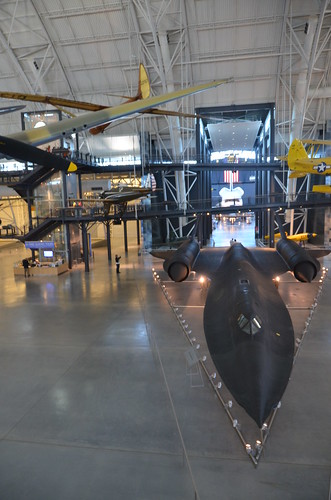
Steven F. Udvar-Hazy Center: major hall panorama (P-40 et al)
rapid prototype cost
Image by Chris Devers
See far more pictures of this, and the Wikipedia post.


Specifics, quoting from Smithsonian National Air and Space Museum | Curtiss P-40E Warhawk (Kittyhawk IA):


Regardless of whether recognized as the Warhawk, Tomahawk, or Kittyhawk, the Curtiss P-40 proved to be a productive, versatile fighter for the duration of the 1st half of Globe War II. The shark-mouthed Tomahawks that Gen. Claire Chennault’s &quotFlying Tigers&quot flew in China against the Japanese remain among the most well-known airplanes of the war. P-40E pilot Lt. Boyd D. Wagner became the initial American ace of Globe War II when he shot down six Japanese aircraft in the Philippines in mid-December 1941.


Curtiss-Wright constructed this airplane as Model 87-A3 and delivered it to Canada as a Kittyhawk I in 1941. It served until 1946 in No. 111 Squadron, Royal Canadian Air Force. U.S. Air Force personnel at Andrews Air Force Base restored it in 1975 to represent an aircraft of the 75th Fighter Squadron, 23rd Fighter Group, 14th Air Force.


Donated by the Exchange Club in Memory of Kellis Forbes.


Manufacturer:
Curtiss Aircraft Firm


Date:

1939


Country of Origin:

United States of America


Dimensions:

Overall: 330 x 970cm, 2686kg, 1140cm (10ft 9 15/16in. x 31ft 9 7/8in., 5921.6lb., 37ft four 13/16in.)


Supplies:

All-metal, semi-monocoque


Physical Description:

Single engine, single seat, fighter aircraft.


Long Description:

Whether it was the Tomahawk, Warhawk, or Kittyhawk, the Curtiss P-40 was a successful and versatile fighter aircraft for the duration of the very first half of World War II. The shark-mouthed Tomahawks that General Claire Chennault led against the Japanese stay among the most common airplanes of the war. In the Phillipines, Lt. Boyd D. Wagner became the initial American ace of Globe War II whilst flying a P-40E when he shot down six Japanese aircraft in the course of mid-December 1941. P-40s had been very first-line Army Air Corps fighters at the start off of the war but they quickly gave way to a lot more advanced designs such as the Republic P-47 Thunderbolt and the Lockheed P-38 Lightning (see NASM collection for each aircraft). The P-40 is not ranked amongst the very best overall fighters of the war but it was a rugged, successful style obtainable in huge numbers early in the war when America and her allies urgently necessary them. The P-40 remained in production from 1939 to the finish of 1944 and a total of 13, 737 had been constructed.


Design and style engineer Dr. Donovan R. Berlin layed the foundation for the P-40 in 1935 when he designed the agile, but lightly-armed, P-36 fighter equipped with a radial, air-cooled engine. The Curtiss-Wright Corporation won a production contract for 210 P-36 airplanes in 1937-the biggest Army airplane contract awarded since World War I. Worldwide, fighter aircraft styles matured rapidly throughout the late 1930s and it was quickly apparent that the P-36 was no match for newer European styles. Higher altitude efficiency in particular became a priceless commodity. Berlin attempted to boost the P-36 by redesigning it in to accommodate a turbo-supercharged Allison V-1710-11 inline, liquid-cooled engine. The new aircraft was designated the XP-37 but proved unpopular with pilots. The turbo-supercharger was not trustworthy and Berlin had placed the cockpit too far back on the fuselage, restricting the view to the front of the fighter. Nonetheless, when the engine was not providing difficulty, the more-streamlined XP-37 was considerably faster than the P-36.


Curtiss attempted again in 1938. Berlin had modified yet another P-36 with a new Allison V-1710-19 engine. It was designated the XP-40 and initial flew on October 14, 1938. The XP-40 looked promising and Curtiss provided it to Army Air Corps leaders who evaluated the airplane at Wright Field, Ohio, in 1939, along with several other fighter proposals. The P-40 won the competitors, soon after some modifications, and Curtiss received an order for 540. At this time, the armament package consisted of two .50 caliber machine guns in the fuselage and 4 .30 caliber machine guns in the wings.


Right after production started in March 1940, France ordered 140 P-40s but the British took delivery of these airplanes when Paris surrendered. The British named the aircraft Tomahawks but located they performed poorly in higher-altitude combat over northern Europe and relegated them to low-altitude operations in North Africa. The Russians purchased far more than two,000 P-40s but information of their operational history stay obscure.


When the United States declared war, P-40s equipped numerous of the Army Air Corps’s front line fighter units. The plucky fighter at some point saw combat in nearly every theater of operations becoming the most powerful in the China-Burma-India (CBI) Theater. Of all the CBI groups that gained the most notoriety of the whole war, and remains to this day synonymous with the P-40, is the American Volunteer Group (AVG) or the Flying Tigers. The unit was organized right after the Chinese gave former U. S. Army Air Corps Captain Claire Lee Chennault nearly 9 million dollars in 1940 to get aircraft and recruit pilots to fly against the Japanese. Chennault’s most critical help within the Chinese government came from Madam Chiang Kai-shek, a Lt. Colonel in the Chinese Air Force and for a time, the service’s general commander.


The funds from China diverted an order placed by the British Royal Air Force for one hundred Curtiss-Wright P-40B Tomahawks but getting airplanes was only 1 essential step in making a fighting air unit. Educated pilots had been necessary, and quickly, as tensions across the Pacific escalated. On April 15, 1941, President Franklin D. Roosevelt quietly signed an Executive Order permitting Chennault to recruit straight from the ranks of American military reserve pilots. Inside a couple of months, 350 flyers joined from pursuit (fighter), bomber, and patrol squadrons. In all, about half the pilots in the Flying Tigers came from the U. S. Navy and Marine Corps although the Army Air Corps supplied a single-third. Factory test pilots at Bell, Consolidated, and other firms, and commercial airline pilots, filled the remaining slots.


The Flying Tigers flew their very first mission on December 20. The unit’s name was derived from the ferocious fangs and teeth painted on the nose of AVG P-40s at either side of the distinctive, large radiator air intake. The idea is mentioned to originate from photographs in a magazine that showed Royal Air Force Tomahawks of No. 112 Squadron, operating in the western desert of North Africa, adorned with fangs and teeth painted around their air intakes. The Flying Tigers have been the first true opposition the Japanese military encountered. In less than 7 months of action, AVG pilots destroyed about 115 Japanese aircraft and lost only 11 planes in air-to-air combat. The AVG disbanded on July 4, 1942, and its assets, like a handful of pilots, became a part of the U. S. Army Air Forces (AAF) 23rd Fighter Group in the newly activated 14th Air Force. Chennault, now a Brigadier General, assumed command of the 14th AF and by war’s finish, the 23rd was one particular of the highest-scoring Army fighter groups.


As wartime experience in the P-40 mounted, Curtiss made many modifications. Engineers added armor plate, far better self-sealing fuel tanks, and a lot more powerful engines. They modified the cockpit to improve visibility and changed the armament package to six, wing-mounted, .50 caliber machine guns. The P-40E Kittyhawk was the first model with this gun package and it entered service in time to serve in the AVG. The final model produced in quantity was the P-40N, the lightest P-40 built in quantity, and considerably more quickly than prior models. Curtiss built a single P-40Q. It was the fastest P-40 to fly (679 kph/422 mph) but it could not match the overall performance of the P-47 Thunderbolt and the P-51 Mustang so Curtiss ended development of the P-40 series with this model. In addition to the AAF, a lot of Allied nations purchased and flew P-40s which includes England, France, China, Russia, Australia, New Zealand, Canada, South Africa, and Turkey.


The Smithsonian P-40E did not serve in the U. S. military. Curtiss-Wright constructed it in Buffalo, New York, as Model 87-A3 and delivered it to Canada as a Kittyhawk IA on March 11, 1941. It served in No. 111 Squadron, Royal Canadian Air Force (RCAF). When the Japanese navy moved to attack Midway, they sent a diversionary battle group to menace the Aleutian Islands. Canada moved No. 111 Squadron to Alaska to assist defend the region. Soon after the Japanese threat diminished, the unit returned to Canada and sooner or later transferred to England without its P-40s. The RCAF declared the NASM Kittyhawk IA surplus on July 27, 1946, and the aircraft sooner or later returned to the United States. It had a number of owners just before ending up with the Explorer Scouts youth group in Meridian, Mississippi. For the duration of the early 1960s, the Smithsonian began browsing for a P-40 with a documented history of service in the AVG but discovered none. In 1964, the Exchange Club in Meridian donated the Kittyhawk IA to the National Aeronautical Collection, in memory of Mr. Kellis Forbes, a neighborhood man devoted to Boys Club activities. A U. S. Air Force Reserve crew airlifted the fighter to Andrews Air Force Base, Maryland, on March 13, 1964. Andrews personnel restored the airplane in 1975 and painted it to represent an aircraft of the 75th Fighter Squadron, 23rd Fighter Group, 14th Air Force.


• • •


Quoting from Wikipedia | Curtiss P-40 Warhawk:


The Curtiss P-40 Warhawk was an American single-engine, single-seat, all-metal fighter and ground attack aircraft that 1st flew in 1938. It was utilized by the air forces of 28 nations, including these of most Allied powers in the course of Planet War II, and remained in front line service until the end of the war. It was the third most-created American fighter, soon after the P-51 and P-47 by November 1944, when production of the P-40 ceased, 13,738 had been constructed, all at Curtiss-Wright Corporation‘s principal production facility at Buffalo, New York.


The P-40 style was a modification of the previous Curtiss P-36 this lowered improvement time and enabled a rapid entry into production and operational service.


Warhawk was the name the United States Army Air Corps adopted for all models, making it the official name in the United States for all P-40s. The British Commonwealth and Soviet air forces employed the name Tomahawk for models equivalent to the P-40B and P-40C, and the name Kittyhawk for models equivalent to the P-40D and all later variants.


The P-40’s lack of a two-stage supercharger made it inferior to Luftwaffe fighters such as the Messerschmitt Bf 109 or the Focke-Wulf Fw 190 in high-altitude combat and it was rarely employed in operations in Northwest Europe. Amongst 1941 and 1944, nonetheless, the P-40 played a crucial role with Allied air forces in 3 main theaters: North Africa, the Southwest Pacific and China. It also had a significant role in the Middle East, Southeast Asia, Eastern Europe, Alaska and Italy. The P-40’s overall performance at higher altitudes was not as critical in these theaters, where it served as an air superiority fighter, bomber escort and fighter bomber.


P-40s first saw combat with the British Commonwealth squadrons of the Desert Air Force (DAF) in the Middle East and North African campaigns, during June 1941. The Royal Air Force‘s No. 112 Squadron was among the 1st to operate Tomahawks, in North Africa, and the unit was the first to function the &quotshark mouth&quot logo, copying similar markings on some Luftwaffe Messerschmitt Bf 110 twin-engine fighters. [N 1]


Though it gained a post-war reputation as a mediocre design, appropriate only for close air assistance, much more current analysis including scrutiny of the records of person Allied squadrons indicates that the P-40 performed surprisingly well as an air superiority fighter, at occasions suffering severe losses, but also taking a very heavy toll on enemy aircraft. The P-40 supplied the further benefit of low cost, which kept it in production as a ground-attack fighter extended right after it was obsolete in the air superiority part.


As of 2008, 19 P-40s were airworthy.


Astoria Scum River Bridge
rapid prototype cost
Image by jasoneppink

For much more than twenty years, a leaky pipe on 33rd Street beneath the Hell Gate Bridge viaduct approach submerged a lot more than a hundred square feet of heavily-trafficked sidewalk under a festering cesspool of standing water. Astoria Scum River, as it was known as, stretched the whole width of the sidewalk, and as winter approached, the river iced over and became particularly hazardous to cross.


Astoria Scum River Bridge was constructed to provide Astorians an opportunity to safely cross this hazard. The unauthorized bridge was a present to the pedestrians of Astoria in the absence of effective municipal efforts to ameliorate the problem.


The bridge was made at zero price completely from recycled supplies: an old work bench discovered on the curb, rescued screws from a disassembled desk, and a metal plate from an expired electrical element. It was installed and devoted on December 30th, 2009.


On January 25th, 2010, Astoria Scum River Bridge was the subject of a commendation from the workplace of NYC Council Member Peter F. Vallone, Jr., accompanied by a pledge to work with Amtrak to re-route Astoria Scum River off the sidewalk.


Two days later, Amtrak workers began construction operate. Astoria Scum River was speedily routed off the sidewalk, and inside a couple months, custom-made grates have been installed to comprehensive the project. The bridge, no longer required, was de-installed on March 20th, 2010 and returned to the curb whence it came.


Astoria Scum River Bridge is an unauthorized city improvement by Jason Eppink and Posterchild.


Astoria Scum River Bridge
rapid prototype cost
Image by jasoneppink

For more than twenty years, a leaky pipe on 33rd Street beneath the Hell Gate Bridge viaduct approach submerged much more than a hundred square feet of heavily-trafficked sidewalk under a festering cesspool of standing water. Astoria Scum River, as it was called, stretched the complete width of the sidewalk, and as winter approached, the river iced over and became specifically hazardous to cross.


Astoria Scum River Bridge was constructed to offer Astorians an opportunity to safely cross this hazard. The unauthorized bridge was a gift to the pedestrians of Astoria in the absence of successful municipal efforts to ameliorate the difficulty.


The bridge was created at zero expense completely from recycled materials: an old operate bench identified on the curb, rescued screws from a disassembled desk, and a metal plate from an expired electrical element. It was installed and dedicated on December 30th, 2009.


On January 25th, 2010, Astoria Scum River Bridge was the topic of a commendation from the office of NYC Council Member Peter F. Vallone, Jr., accompanied by a pledge to operate with Amtrak to re-route Astoria Scum River off the sidewalk.


Two days later, Amtrak workers began construction perform. Astoria Scum River was swiftly routed off the sidewalk, and inside a couple months, custom-produced grates had been installed to complete the project. The bridge, no longer required, was de-installed on March 20th, 2010 and returned to the curb whence it came.


Astoria Scum River Bridge is an unauthorized city improvement by Jason Eppink and Posterchild.


(Source from China rapid prototype company blog)

Wednesday, October 21, 2015

Lastest 3d Printing Organizations News

Ratchet Wrench printed on ISS
3d printing companies
Image by NASA’s Marshall Space Flight Center

The ratchet wrench was created by Noah Paul-Gin, an engineer at Created In Space Inc., a northern California business that NASA contracted to design and style, develop and operate the printer. Paul-Gin created a three-D model of the ratchet and made many wrenches, such as the one particular shown right here on an identical printer.


Study a lot more about 3-D Printing In Zero-G:
www.nasa.gov/mission_pages/station/analysis/news/3Dratchet_wrench/


_____________________________________________

These official NASA photographs are being produced obtainable for publication by news organizations and/or for individual use printing by the topic(s) of the photographs. The photographs may possibly not be employed in components, ads, items, or promotions that in any way recommend approval or endorsement by NASA. All Photos employed should be credited. For details on usage rights please check out: www.nasa.gov/audience/formedia/attributes/MP_Photo_Guidelin…


three-D Printing May possibly Save Lives, but Can It Make Cash?

MakerBot is not the only organization that&#39s been hurt by the lack of mainstream demand for the novel technology. In 2013, numerous publicly traded 3-D printing firms – including ExOne, 3D Systems, Organovo Holdings, Voxeljet and Stratasys, which is&nbsp…
Study far more on U.S. News & Planet Report


This MakerBot spin-off just launched a industrial 3Dprinting service

When it comes to firms adopting additive manufacturing processes into their production practices, two paths lie ahead: spend to employees up and train individuals to run 3D-printing production in-house, or outsource any 3D-printing needs to a commercial printer.
Study a lot more on Fortune


Printing 3D Components lays out the positive aspects of 3D printing for packaging industry

Printing 3D Components is a Youngstown, Ohio primarily based company that was founded three years ago. The business specializes in making 3D printed packaging prototypes, as effectively as complete color label printing they also offer 3D printing solutions for other utilizes such as&nbsp…
Read much more on 3ders.org (blog)


Was Customer 3D Printing a Fad or Had been Men and women Just Expecting Also Much? Hint

I won&#39t pretend that a lot of of the most successful 3D printing firms from 2014 didn&#39t devote the year acting a lot more like carnival barkers than heads of technologies firms, due to the fact they most definitely did. Yes, the more than-selling of what 3D printing …
Read much more on 3DPrint.com


(Source from China rapid prototype company blog)

Tuesday, October 20, 2015

Entrepreneur Inverts Internet and Creates Startup to Compete With Google

US-Route-66 Up by way of the 1950s, camping remained the most well-liked way to invest the evening on Route 66. Ca 1951
rapid prototype prices
Image by clamshack

In 1965 at the tender age of 21 left Boston in an old Chevy considerably like the 1 pictured above. I purchased it from an acquaintance for and only following the trip was more than did I discover he by no means owned it and it was still registered to his girlfriend.

With only a handful of hundred dollars, 15 tuna sandwiches, no map or clear destination -other than Sunny So Cal – I stumbled upon Route 66 somewhere near Chicago which I recognized from the Television Series of the early 60s. I stayed on 66 a lot of the way with occasional aimless wanderings away from the mother road.

I stayed at a couple of of these ‘campgrounds’ a night? but largely slept along the side of the road. I kept my military duffle bag (just released from active duty) and a bible in clear view in the trunk – the police occasionally would cease me and want to search the car and the sight of those two things seemed to reassure them I was no drug using hippy, which I wasn’t.

I recall at some point wandering into Las Vegas and instantly possessing two motorcycle cops ‘escort me’ through the city and out into the desert once more.

Somewhere in Utah? in the middle of the night I stopped at a service station and the attendant ‘pretended’ to pour a quart of oil into the motor, off I went and burned the valves.

I recall mile following endless mile of desert and then all of a sudden I was in Barstow-San Bernardino and on a Freeway in heavy traffic all the way to the coast.

Barely produced it into Los Angeles and abandoned the automobile in a gas station after meeting a kind particular person who saw the Massachusetts license plate on the disabled automobile at the curb and offered to rent me a room in his mother’s garage near Inglewood.


National Historic Route 66 Federation


History of Route 66


The Starting


Though entrepreneurs Cyrus Avery of Tulsa, Oklahoma, and John Woodruff of Springfield, Missouri deserve most of the credit for advertising the concept of an interregional hyperlink amongst Chicago and Los Angeles, their lobbying efforts have been not realized till their dreams merged with the national plan of highway and road development.


Although legislation for public highways 1st appeared in 1916, with revisions in 1921, it was not until Congress enacted an even more extensive version of the act in 1925 that the government executed its program for national highway building.


Officially, the numerical designation 66 was assigned to the Chicago-to-Los Angeles route in the summer time of 1926. With that designation came its acknowledgment as 1 of the nation’s principal east-west arteries.


From the outset, public road planners intended U.S. 66 to connect the primary streets of rural and urban communities along its course for the most sensible of factors: most modest towns had no prior access to a main national thoroughfare.


The Formative Years


Route 66 was a highway spawned by the demands of a swiftly altering America. Contrasted with the Lincoln, the Dixie, and other highways of its day, route 66 did not comply with a traditionally linear course. Its diagonal course linked hundreds of predominantly rural communities in Illinois, Missouri, and Kansas to Chicago thus enabling farmers to transport grain and create for redistribution. The diagonal configuration of Route 66 was specifically substantial to the trucking business, which by 1930 had come to rival the railroad for preeminence in the American shipping industry. The abbreviated route amongst Chicago and the Pacific coast traversed primarily flat prairie lands and enjoyed a more temperate climate than northern highways, which produced it specially appealing to truckers.


The Depression Years and the War


In his popular social commentary, The Grapes of Wrath, John Steinbeck proclaimed U. S. Highway 66 the “Mother Road.” Steinbeck’s classic 1939 novel, combined with the 1940 film recreation of the epic odyssey, served to immortalize Route 66 in the American consciousness. An estimated 210,000 people migrated to California to escape the despair of the Dust Bowl. Surely in the minds of these who endured that specifically painful knowledge, and in the view of generations of young children to whom they recounted their story, Route 66 symbolized the “road to chance.”


From 1933 to 1938 thousands of unemployed male youths from practically each and every state have been place to perform as laborers on road gangs to pave the final stretches of the road. As a outcome of this monumental work, the Chicago-to-Los Angeles highway was reported as “continuously paved” in 1938.


Completion of this all-weather capability on the eve of Globe War II was especially significant to the nation’s war work. The encounter of a young Army captain, Dwight D. Eisenhower, who identified his command bogged down in spring mud near Ft. Riley, Kansas, while on a coast-to-coast maneuver, left an indelible impression. The War Department necessary improved highways for rapid mobilization throughout wartime and to market national defense during peacetime. At the outset of American involvement in Globe War II, the War Department singled out the West as ideal for military education bases in part since of its geographic isolation and particularly because it presented regularly dry weather for air and field maneuvers.


Route 66 helped to facilitate the single greatest wartime manpower mobilization in the history of the nation. Between 1941 and 1945 the government invested roughly billion in capital projects throughout California, a large portion of which have been in the Los Angeles-San Diego region. This enormous capital outlay served to underwrite completely new industries that produced thousands of civilian jobs.


The Postwar Years


A fter the war, Americans have been more mobile than ever just before. Thousands of soldiers, sailors, and airmen who received military education in California, Arizona, New Mexico, Oklahoma, and Texas abandoned the harsh winters of Chicago, New York City, and Boston for the “barbecue culture” of the Southwest and the West. Again, for many, Route 66 facilitated their relocation.


One particular such emigrant was Robert William Troup, Jr., of Harrisburg, Pennsylvania. Bobby Troup, former pianist with the Tommy Dorsey band and ex-Marine captain, penned a lyrical road map of the now popular cross-country road in which the words, “get your kicks on Route 66″ became a catch phrase for countless motorists who moved back and forth in between Chicago and the Pacific Coast. The well-known recording was released in 1946 by Nat King Cole 1 week right after Troup’s arrival in Los Angeles.


Retailer owners, motel managers, and gas station attendants recognized early on that even the poorest travelers needed food, automobile maintenance, and adequate lodging. Just as New Deal operate relief programs offered employment with the construction and the maintenance of Route 66, the look of countless tourist courts, garages, and diners promised sustained financial development soon after the road’s completion. If military use of the highway during wartime ensured the early success of roadside firms, the demands of the new tourism market in the postwar decades gave rise to contemporary facilities that assured long-term prosperity.


Roadside Architecture


The evolution of tourist-targeted facilities is effectively represented in the roadside architecture along U. S. Highway 66. For instance, most Americans who drove the route did not stay in hotels. They preferred the accommodations that emerged from automobile travel – motels. Motels evolved from earlier attributes of the American roadside such as the auto camp and the tourist residence. The auto camp developed as townspeople along Route 66 roped off spaces in which travelers could camp for the evening. Camp supervisors – some of whom were employed by the a variety of states – offered water, fuel wood, privies or flush toilets, showers, and laundry facilities free of charge of charge.


The national outgrowth of the auto camp and tourist residence was the cabin camp (often named cottages) that supplied minimal comfort at reasonably priced costs. Numerous of these cottages are still in operation. Ultimately, auto camps and cabin camps gave way to motor courts in which all of the rooms have been beneath a single roof. Motor courts presented extra amenities, such as adjoining restaurants, souvenir shops, and swimming pools. Among the much more popular nevertheless connected with Route 66 are the El Vado and Zia Motor Lodge in Albuquerque, New Mexico.


In the early years of Route 66, service station prototypes had been developed regionally by means of experimentation, and then were adopted universally across the nation. Buildings were distinctive as gas stations, however clearly connected with a specific petroleum organization. Most evolved from the simplest “filling station” notion – a house with a single or two service pumps in front – and then became far more elaborate, with service bays and tire outlets. Amongst the most outstanding examples of the evolution of gas stations along Route 66 are Soulsby’s Shell station in Mount Olive, Illinois Bob Audettes’ gas station complicated in Barton, New Mexico and the Tower Fina Station in Shamrock, Texas.


Route 66 and many points of interest along the way had been familiar landmarks by the time a new generation of postwar motorists hit the road in the 1960′s. It was for the duration of this period that the television series, “Route 66″, starring Martin Milner and George Maharis drove into the living rooms of America every Friday. By today’s requirements, the show is rather unbelievable but in the 1960′s, it brought Americans back to the route looking for new adventure.


Excessive truck use for the duration of Planet War II and the comeback of the automobile sector quickly following the war brought wonderful stress to bear on America’s highways. The national highway system had deteriorated to an appalling situation. Practically all roads were functionally obsolete and dangerous because of narrow pavements and antiquated structural features that lowered carrying capacity.


Ironically, the public lobby for speedy mobility and enhanced highways that gained Route 66 its enormous reputation in earlier decades also signaled its demise beginning in the mid-1950′s. Mass federal sponsorship for an interstate technique of divided highways markedly elevated with Dwight D. Eisenhower’s second term in the ‘White Property. Common Eisenhower had returned from Germany extremely impressed by the strategic worth of Hitler’s Autobahn. “During World War II,” he recalled later, “I saw the superlative program of German national highways crossing that country and providing the possibility, frequently lacking in the United States, to drive with speed and safety at the very same time.”


The congressional response to the president’s commitment was the passage of the Federal Aid Highway Act of 1956, which offered a comprehensive financial umbrella to uderwrite the expense of the national interstate and defense highway system.


By 1970, nearly all segments of original Route 66 had been bypassed by a contemporary 4-lane highway.


In several respects, the physical remains of Route 66 mirror the evolution of highway improvement in the United States from a rudimentary hodge-podge of state and nation roads to a federally subsidized complex of uniform, nicely-designed interstate expressways. Various alignments of the legendary road, several of which are still detectable, illustrate the evolution of road engineering from coexistence with the surrounding landscape to domination of it.


Route 66 symbolized the renewed spirit of optimism that pervaded the nation soon after economic catastrophe and global war. Usually known as, “The Principal Street of America”, it linked a remote and under-populated area with two crucial 20th century cities – Chicago and Los Angeles.


The outdated, poorly maintained vestiges of U.S. Highway 66 fully succumbed to the interstate method in October 1984 when the final section of the original road was bypassed by Interstate 40 at Williams, Arizona.


Now that the highway has celebrated its 75th birthday, its contribution to the nation should be evaluated in the broader context of American social and cultural history. The look of U.S. Highway 66 on the American scene coincided with unparalleled financial strife and global instability, yet it hastened the most complete westward movement and economic development in United States history. Like the early, extended-gone trails of the nineteenth century, Route 66 helped to spirit a second and perhaps far more permanent mass relocation of Americans. We only hope it does not meet the fate of these when-popular arteries.


Aid us save this invaluable piece of Americana prior to it is only a memory.


Fill in your data below to obtain updates and offers from the National Historic Route 66 Federation.


© 2014 National Historic Route 66 Federation. All Rights Reserved


Entrepreneur Inverts Web and Creates Startup to Compete With Google

When a customer wants to purchase a auto, a residence or even hire a service, he doesn&#39t need to do the browsing any longer. Right after making … This startup organization intends to become active in over 30 countries and more than 5 thousand cities, and its …
Read more on MarketWatch


Design your personal custom, trendy 3D printed jewelry with Trove

But that&#39s not all to guarantee total satisfaction before possessing to commit, Trove sends customers a plastic prototype of their style to attempt on at residence. By taking advantage of the speed and low expense of fast-prototyping and the customization and …
Read much more on 3ders.org (weblog)


(Source from China rapid prototype company blog)