Monday, August 31, 2015

3D Printed Spot Welder Increases Prototyping Capabilities

3D Printed Spot Welder Increases Prototyping Capabilities

“I would like to develop a CNC desktop plasma cutter that I feel I&#39m going to lead my shop in that direction for creating holding mechanisms for stepper motors, for generating structural elements for CNC machines. I believe this is a excellent direction for a …
Read much more on 3DPrint.com


Louisville factory: one hundred printers, three workers

&quotWe are turning around orders that generally take a week to comprehensive, in 24 hours,&quot Cost-free mentioned, adding that orders can variety from one to 1,000 pieces. The reality that the factory … Free of charge, an entrepreneur and manufacturing expert, got the idea for …
Read much more on CNNMoney


(Source from China rapid prototype company blog)

Friday, August 28, 2015

Introducing The Best Business For Skilled And Cost-effective Rapid Prototyping Services

Introducing The Best Firm For Expert And Affordable Speedy Prototyping Services

To keep ahead of demand in the existing economic climate, it is crucial that companies pair with production partners that have the facilities to make sure sector-top turnaround speed as properly as innovative production methods.


Positioned in San Francisco Bay, WESTEC Plastics are professionals at guiding goods from the drawing board to the marketplace. Their desire to fulfill their customer’s product specifications to the exact detail has helped them turn into a top innovator within the custom injection molding sector. This leadership role within the market helped them to amass clientele from a wide array of industries, like health-related, automotive, aerospace, consumer and telecommunications.


For unmatched manufacturing reliability, WESTEC Plastics is the clear decision. As element of their speedy prototyping services, they offer you their help to clientele at the quite inception of a project, so that every detail is made to perfection to make certain defect-free of charge goods that standout for their unmatched reliability. The specialists at WESTEC Plastics optimize the molding process with a scientific, data-driven approach. This operating method enables for essential flexibility in the regions of portion style, mold style and fabrication, material, and machine choice.


Their working combination of experienced engineers and molding technicians, each and every with knowledge in superior fast prototyping solutions, signifies that WESTEC Plastics can attend to your ever requirement, no matter how complex. For instance, when manufacturing products in the healthcare field, the specialists at WESTEC Plastics can guarantee exceptional levels of product safety by conducting all production within their class one hundred,000 clean room. This controlled atmosphere eliminates the possibility of particulate contamination, which guarantees that the solution created is safe for sensible and skilled application within healthcare buildings.


When you choose the fast prototyping services of WESTEC Plastics, you are opening up your solution to a plethora of standout customization possibilities. For added flexibility in the production process, they offer molding machines for single and several cavity as properly as conventional or hot runner moulds. This commitment to engineering flexibility is highlighted by the company’s variation of gear. The specialist machines in use at WESTEC’s manufacturing facility range in size from 39 tons to 440 tons. This size differential signifies that the technicians at WESTEC Plastics can custom manufacture goods that differ drastically in scale: from larger industrial products to merchandise that only way a fraction of an ounce. Buyers of this leader in rapid prototyping solutions also have the potential to pick from a range of engineering and commodity resins or filled components which make use of glass, mica, Teflon, carbon and talc.


The group at WESTEC Plastics will function side by side with you throughout the production cycle. From the very first custom-produced mold design and style to the final item inspection and packaging, WESTEC Plastics guarantees high quality every step of the way. To give your solution the greatest partner for accomplishment, select the speedy prototyping services of WESTEC Plastics, and expertise custom injection moulding that is the very pinnacle of inexpensive reliability.


About WESTEC Plastics: WESTEC Plastics offers a wide selection of injection molding services such as design, production, prototyping and sub-assembly. They are specialists at making best top quality, complex parts for highly inexpensive costs. For far more details, please go to WestecPlastics.


WESTEC Plastics is an Injection Molding Firm offering Design and style for Manufacturability, Custom Plastic Injection Molding and Rapid Prototyping Services in California. It further offers turnkey injection molding solutions.


Uncover More Rapid Prototyping Organizations In China Articles


(Source from China rapid prototype company blog)

Steven F. Udvar-Hazy Center: Photomontage of SR-71 on the port side

Verify out these speedy prototype full service china photos:


Steven F. Udvar-Hazy Center: Photomontage of SR-71 on the port side
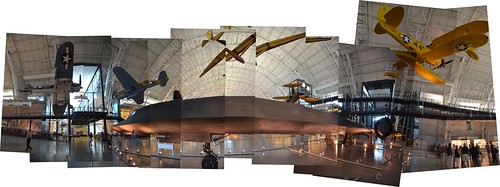
rapid prototype full service china

Image by Chris Devers
Posted via e-mail to ☛ HoloChromaCinePhotoRamaScope‽: cdevers.posterous.com/panoramas-of-the-sr-71-blackbird-at…. See the full gallery on Posterous …


• • • • •


See more photos of this, and the Wikipedia report.


Information, quoting from Smithsonian National Air and Space Museum | Lockheed SR-71 Blackbird:


No reconnaissance aircraft in history has operated globally in much more hostile airspace or with such total impunity than the SR-71, the world’s quickest jet-propelled aircraft. The Blackbird’s overall performance and operational achievements placed it at the pinnacle of aviation technologies developments in the course of the Cold War.


This Blackbird accrued about two,800 hours of flight time in the course of 24 years of active service with the U.S. Air Force. On its final flight, March 6, 1990, Lt. Col. Ed Yielding and Lt. Col. Joseph Vida set a speed record by flying from Los Angeles to Washington, D.C., in 1 hour, four minutes, and 20 seconds, averaging three,418 kilometers (2,124 miles) per hour. At the flight’s conclusion, they landed at Washington-Dulles International Airport and turned the airplane more than to the Smithsonian.


Transferred from the United States Air Force.


Manufacturer:
Lockheed Aircraft Corporation


Designer:
Clarence L. &quotKelly&quot Johnson


Date:

1964


Country of Origin:

United States of America


Dimensions:

Overall: 18ft 5 15/16in. x 55ft 7in. x 107ft 5in., 169998.5lb. (five.638m x 16.942m x 32.741m, 77110.8kg)

Other: 18ft 5 15/16in. x 107ft 5in. x 55ft 7in. (5.638m x 32.741m x 16.942m)


Supplies:

Titanium


Physical Description:

Twin-engine, two-seat, supersonic strategic reconnaissance aircraft airframe constructed largley of titanium and its alloys vertical tail fins are constructed of a composite (laminated plastic-sort material) to reduce radar cross-section Pratt and Whitney J58 (JT11D-20B) turbojet engines function large inlet shock cones.


Long Description:

No reconnaissance aircraft in history has operated in far more hostile airspace or with such comprehensive impunity than the SR-71 Blackbird. It is the quickest aircraft propelled by air-breathing engines. The Blackbird’s overall performance and operational achievements placed it at the pinnacle of aviation technologies developments for the duration of the Cold War. The airplane was conceived when tensions with communist Eastern Europe reached levels approaching a full-blown crisis in the mid-1950s. U.S. military commanders desperately necessary accurate assessments of Soviet worldwide military deployments, especially close to the Iron Curtain. Lockheed Aircraft Corporation’s subsonic U-two (see NASM collection) reconnaissance aircraft was an capable platform but the U. S. Air Force recognized that this relatively slow aircraft was already vulnerable to Soviet interceptors. They also understood that the rapid improvement of surface-to-air missile systems could put U-two pilots at grave risk. The danger proved reality when a U-2 was shot down by a surface to air missile more than the Soviet Union in 1960.


Lockheed’s first proposal for a new higher speed, higher altitude, reconnaissance aircraft, to be capable of avoiding interceptors and missiles, centered on a design and style propelled by liquid hydrogen. This proved to be impracticable simply because of considerable fuel consumption. Lockheed then reconfigured the style for traditional fuels. This was feasible and the Central Intelligence Agency (CIA), currently flying the Lockheed U-2, issued a production contract for an aircraft designated the A-12. Lockheed’s clandestine ‘Skunk Works’ division (headed by the gifted design and style engineer Clarence L. &quotKelly&quot Johnson) developed the A-12 to cruise at Mach 3.two and fly nicely above 18,288 m (60,000 feet). To meet these difficult needs, Lockheed engineers overcame numerous daunting technical challenges. Flying much more than three occasions the speed of sound generates 316° C (600° F) temperatures on external aircraft surfaces, which are sufficient to melt standard aluminum airframes. The style group chose to make the jet’s external skin of titanium alloy to which shielded the internal aluminum airframe. Two conventional, but really potent, afterburning turbine engines propelled this outstanding aircraft. These power plants had to operate across a massive speed envelope in flight, from a takeoff speed of 334 kph (207 mph) to far more than 3,540 kph (2,200 mph). To avert supersonic shock waves from moving inside the engine intake causing flameouts, Johnson’s group had to style a complicated air intake and bypass method for the engines.


Skunk Functions engineers also optimized the A-12 cross-section style to exhibit a low radar profile. Lockheed hoped to accomplish this by meticulously shaping the airframe to reflect as little transmitted radar power (radio waves) as achievable, and by application of particular paint made to absorb, rather than reflect, these waves. This therapy became one particular of the 1st applications of stealth technology, but it by no means fully met the design ambitions.


Test pilot Lou Schalk flew the single-seat A-12 on April 24, 1962, after he became airborne accidentally in the course of high-speed taxi trials. The airplane showed great promise but it needed considerable technical refinement just before the CIA could fly the first operational sortie on Could 31, 1967 – a surveillance flight over North Vietnam. A-12s, flown by CIA pilots, operated as element of the Air Force’s 1129th Specific Activities Squadron beneath the &quotOxcart&quot program. While Lockheed continued to refine the A-12, the U. S. Air Force ordered an interceptor version of the aircraft designated the YF-12A. The Skunk Operates, nevertheless, proposed a &quotspecific mission&quot version configured to conduct post-nuclear strike reconnaissance. This system evolved into the USAF’s familiar SR-71.


Lockheed constructed fifteen A-12s, such as a particular two-seat trainer version. Two A-12s had been modified to carry a unique reconnaissance drone, designated D-21. The modified A-12s had been redesignated M-21s. These have been created to take off with the D-21 drone, powered by a Marquart ramjet engine mounted on a pylon amongst the rudders. The M-21 then hauled the drone aloft and launched it at speeds high enough to ignite the drone’s ramjet motor. Lockheed also built three YF-12As but this kind in no way went into production. Two of the YF-12As crashed during testing. Only one survives and is on show at the USAF Museum in Dayton, Ohio. The aft section of one of the &quotwritten off&quot YF-12As which was later employed along with an SR-71A static test airframe to manufacture the sole SR-71C trainer. A single SR-71 was lent to NASA and designated YF-12C. Such as the SR-71C and two SR-71B pilot trainers, Lockheed constructed thirty-two Blackbirds. The 1st SR-71 flew on December 22, 1964. Simply because of extreme operational expenses, military strategists decided that the more capable USAF SR-71s should replace the CIA’s A-12s. These were retired in 1968 right after only a single year of operational missions, mostly more than southeast Asia. The Air Force’s 1st Strategic Reconnaissance Squadron (element of the 9th Strategic Reconnaissance Wing) took over the missions, flying the SR-71 starting in the spring of 1968.


Right after the Air Force began to operate the SR-71, it acquired the official name Blackbird– for the special black paint that covered the airplane. This paint was formulated to absorb radar signals, to radiate some of the tremendous airframe heat generated by air friction, and to camouflage the aircraft against the dark sky at high altitudes.


Knowledge gained from the A-12 system convinced the Air Force that flying the SR-71 safely necessary two crew members, a pilot and a Reconnaissance Systems Officer (RSO). The RSO operated with the wide array of monitoring and defensive systems installed on the airplane. This gear included a sophisticated Electronic Counter Measures (ECM) method that could jam most acquisition and targeting radar. In addition to an array of sophisticated, high-resolution cameras, the aircraft could also carry equipment developed to record the strength, frequency, and wavelength of signals emitted by communications and sensor devices such as radar. The SR-71 was designed to fly deep into hostile territory, avoiding interception with its tremendous speed and high altitude. It could operate safely at a maximum speed of Mach three.three at an altitude far more than sixteen miles, or 25,908 m (85,000 ft), above the earth. The crew had to put on stress suits similar to these worn by astronauts. These suits were necessary to protect the crew in the event of sudden cabin pressure loss although at operating altitudes.


To climb and cruise at supersonic speeds, the Blackbird’s Pratt &amp Whitney J-58 engines were made to operate continuously in afterburner. While this would appear to dictate high fuel flows, the Blackbird in fact achieved its ideal &quotgas mileage,&quot in terms of air nautical miles per pound of fuel burned, during the Mach three+ cruise. A typical Blackbird reconnaissance flight may well need several aerial refueling operations from an airborne tanker. Every single time the SR-71 refueled, the crew had to descend to the tanker’s altitude, generally about 6,000 m to 9,000 m (20,000 to 30,000 ft), and slow the airplane to subsonic speeds. As velocity decreased, so did frictional heat. This cooling impact caused the aircraft’s skin panels to shrink significantly, and those covering the fuel tanks contracted so much that fuel leaked, forming a distinctive vapor trail as the tanker topped off the Blackbird. As soon as the tanks had been filled, the jet’s crew disconnected from the tanker, relit the afterburners, and once more climbed to higher altitude.


Air Force pilots flew the SR-71 from Kadena AB, Japan, throughout its operational profession but other bases hosted Blackbird operations, too. The 9th SRW occasionally deployed from Beale AFB, California, to other locations to carryout operational missions. Cuban missions were flown straight from Beale. The SR-71 did not begin to operate in Europe until 1974, and then only temporarily. In 1982, when the U.S. Air Force primarily based two aircraft at Royal Air Force Base Mildenhall to fly monitoring mission in Eastern Europe.


When the SR-71 became operational, orbiting reconnaissance satellites had currently replaced manned aircraft to gather intelligence from internet sites deep inside Soviet territory. Satellites could not cover each and every geopolitical hotspot so the Blackbird remained a crucial tool for international intelligence gathering. On a lot of occasions, pilots and RSOs flying the SR-71 supplied info that proved vital in formulating profitable U. S. foreign policy. Blackbird crews supplied crucial intelligence about the 1973 Yom Kippur War, the Israeli invasion of Lebanon and its aftermath, and pre- and post-strike imagery of the 1986 raid conducted by American air forces on Libya. In 1987, Kadena-based SR-71 crews flew a number of missions more than the Persian Gulf, revealing Iranian Silkworm missile batteries that threatened industrial shipping and American escort vessels.


As the performance of space-primarily based surveillance systems grew, along with the effectiveness of ground-primarily based air defense networks, the Air Force began to shed enthusiasm for the high-priced plan and the 9th SRW ceased SR-71 operations in January 1990. Despite protests by military leaders, Congress revived the program in 1995. Continued wrangling more than operating budgets, nonetheless, quickly led to final termination. The National Aeronautics and Space Administration retained two SR-71As and the 1 SR-71B for high-speed research projects and flew these airplanes till 1999.


On March 6, 1990, the service profession of 1 Lockheed SR-71A Blackbird ended with a record-setting flight. This special airplane bore Air Force serial number 64-17972. Lt. Col. Ed Yeilding and his RSO, Lieutenant Colonel Joseph Vida, flew this aircraft from Los Angeles to Washington D.C. in 1 hour, 4 minutes, and 20 seconds, averaging a speed of 3,418 kph (2,124 mph). At the conclusion of the flight, ‘972 landed at Dulles International Airport and taxied into the custody of the Smithsonian’s National Air and Space Museum. At that time, Lt. Col. Vida had logged 1,392.7 hours of flight time in Blackbirds, more than that of any other crewman.


This certain SR-71 was also flown by Tom Alison, a former National Air and Space Museum’s Chief of Collections Management. Flying with Detachment 1 at Kadena Air Force Base, Okinawa, Alison logged far more than a dozen ‘972 operational sorties. The aircraft spent twenty-4 years in active Air Force service and accrued a total of 2,801.1 hours of flight time.


Wingspan: 55’7&quot

Length: 107’5&quot

Height: 18’6&quot

Weight: 170,000 Lbs


Reference and Additional Reading:


Crickmore, Paul F. Lockheed SR-71: The Secret Missions Exposed. Oxford: Osprey Publishing, 1996.


Francillon, Rene J. Lockheed Aircraft Because 1913. Annapolis, Md.: Naval Institute Press, 1987.


Johnson, Clarence L. Kelly: More Than My Share of It All. Washington D.C.: Smithsonian Institution Press, 1985.


Miller, Jay. Lockheed Martin’s Skunk Works. Leicester, U.K.: Midland Counties Publishing Ltd., 1995.


Lockheed SR-71 Blackbird curatorial file, Aeronautics Division, National Air and Space Museum.


DAD, 11-11-01


Steven F. Udvar-Hazy Center: B-29 Superfortress “Enola Gay” panorama
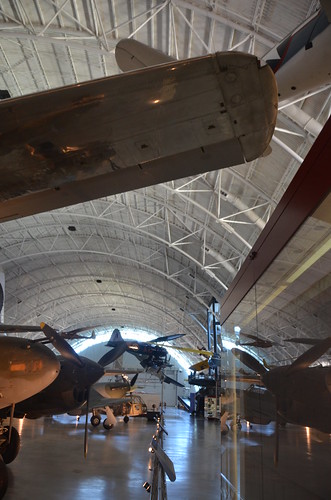
rapid prototype full service china

Image by Chris Devers

Quoting Smithsonian National Air and Space Museum | Lockheed P-38J-10-LO Lightning :


In the P-38 Lockheed engineer Clarence &quotKelly&quot Johnson and his team of designers created a single of the most effective twin-engine fighters ever flown by any nation. From 1942 to 1945, U. S. Army Air Forces pilots flew P-38s over Europe, the Mediterranean, and the Pacific, and from the frozen Aleutian Islands to the sun-baked deserts of North Africa. Lightning pilots in the Pacific theater downed more Japanese aircraft than pilots flying any other Allied warplane.


Maj. Richard I. Bong, America’s leading fighter ace, flew this P-38J-10-LO on April 16, 1945, at Wright Field, Ohio, to evaluate an experimental method of interconnecting the movement of the throttle and propeller control levers. However, his right engine exploded in flight just before he could conduct the experiment.


Transferred from the United States Air Force.


Manufacturer:
Lockheed Aircraft Business


Date:

1943


Nation of Origin:

United States of America


Dimensions:

Overall: 390 x 1170cm, 6345kg, 1580cm (12ft 9 9/16in. x 38ft four 5/8in., 13988.2lb., 51ft 10 1/16in.)


Components:

All-metal


Physical Description:

Twin-tail boom and twin-engine fighter tricycle landing gear.


• • • • •


Quoting Smithsonian National Air and Space Museum | Boeing B-29 Superfortress &quotEnola Gay&quot:


Boeing’s B-29 Superfortress was the most sophisticated propeller-driven bomber of Globe War II and the first bomber to property its crew in pressurized compartments. Even though made to fight in the European theater, the B-29 found its niche on the other side of the globe. In the Pacific, B-29s delivered a assortment of aerial weapons: conventional bombs, incendiary bombs, mines, and two nuclear weapons.


On August 6, 1945, this Martin-built B-29-45-MO dropped the 1st atomic weapon used in combat on Hiroshima, Japan. Three days later, Bockscar (on show at the U.S. Air Force Museum close to Dayton, Ohio) dropped a second atomic bomb on Nagasaki, Japan. Enola Gay flew as the advance climate reconnaissance aircraft that day. A third B-29, The Excellent Artiste, flew as an observation aircraft on each missions.


Transferred from the United States Air Force.


Manufacturer:
Boeing Aircraft Co.
Martin Co., Omaha, Nebr.


Date:

1945


Country of Origin:

United States of America


Dimensions:

All round: 900 x 3020cm, 32580kg, 4300cm (29ft 6 5/16in. x 99ft 1in., 71825.9lb., 141ft 15/16in.)


Materials:

Polished general aluminum finish


Physical Description:

4-engine heavy bomber with semi-monoqoque fuselage and higher-aspect ratio wings. Polished aluminum finish general, common late-Planet War II Army Air Forces insignia on wings and aft fuselage and serial number on vertical fin 509th Composite Group markings painted in black &quotEnola Gay&quot in black, block letters on lower left nose.


(Source from China rapid prototype company blog)

Thursday, August 27, 2015

Nice Prototype Maker China images

A few nice prototype maker china pictures I found:


IMG_1799
prototype maker china

Image by rose_symotiuk


IMG_1853
prototype maker china

Image by rose_symotiuk


IMG_1858
prototype maker china

Image by rose_symotiuk


(Source from China rapid prototype company blog)

Wednesday, August 26, 2015

Monday, August 24, 2015

Nice Prototyping Quote images

Some cool prototyping quote pictures:


20130706blog.ted2
prototyping quote

Image by cesarharada.com
weblog.ted.com/2013/07/05/unreasonable-at-sea-fellows-frida…


Unreasonable at sea: Fellows Friday with Cesar Harada, who circumnavigated the globe with Protei

Posted by: Karen Eng

July 5, 2013 at 10:56 pm EDT

A lot more


In January of 2013, TED Fellow Cesar Harada, inventor of an open-source sailing robot, set sail on a four-month, 14-nation round-the-world journey with Unreasonable at Sea, a global innovation accelerator on board a boat. Here, he tells us about how this extraordinary voyage helped crystallize his vision for how his open supply sailing robot Protei will contribute to cleaning up the world’s ocean and freshwater environments.


What is Unreasonable at Sea, and how did you come to join this expedition?


The Unreasonable at Sea is an accelerator for global innovation in social entrepreneurship. It is a system for ten entrepreneurs hosted on a floating university that sails around the globe for 4 months while becoming mentored by a group of 20 of the world’s most potent entrepreneurs. On the ship we created our method and organization models — in port we met with possible investors, governments, academics, nonprofits and the regional startup scene.


The plan was started by Daniel Epstein, co-founder of the Unreasonable Institute, and George Kembel co-founder of the Stanford d.college. Many of my close friends suggested that I apply to this system. At first sight, it was very attractive, but when I discovered that they would take 6% equities from our organization Protei, Inc., I became hesitant. Fairly close to the deadline, the TED Fellows system organisers encouraged me to apply, so I finally did and decided to go with Gabriella Levine, Protei, Inc.’s COO, on this life-changing adventure. The plan went beyond my expectations, changed me as a individual and helped us define our business future.


What was the mission of the journey, and how did it dovetail with what you are performing with Protei?


About 1,000 firms applied to this plan shy of 100 different nations of origin, and only 11 ended up becoming chosen. The major criterion is that you have to be a for-profit startup delivering a technology that has the potential to impact positively the lives of millions of men and women. The core belief of the plan is “entrepreneurship can alter the world” — quoting George Bernard Shaw: “The reasonable man (/lady) adapts himself to the globe the unreasonable one persists in trying to adapt the planet to himself. As a result all progress depends on the unreasonable man.”


Even though the plan is taking location on the seven seas, Protei was the only company which was actively connected to the ocean. Our organization styles and manufactures open hardware — shape-shifting sailing robots to discover and clean the ocean. Consider maritime drone to transport environmental sensors and clean-up payload. The variety of applications for a fleet would be to skim oil spills, collect plastic trash, measure radioactivity around Fukushima, patrol all-natural reserves and fish populations, mapping coral reefs, supplying information connections among underwater robots and satellites. We have decided not to help weaponized applications.


Tell us about a handful of of your most critical stops and what you learned in every. How will these inform your future operate with Protei?


In Hawaii, we discovered how Protei could support aid plastic pollution research. We met with Dr. Henk Carson, Marcus Eriksen and Anna Cummins who are amongst the pioneers for plastic pollution research. We journeyed to Kamilo Beach and sampled plastic from the multicoloured beach produced of quite a lot only plastic. Pessimists estimate hundreds of millions of tons of plastic trash are presently breaking down into the ocean and slowly coming up the food chain back to our plates the other estimate only tens of tons: the scientific community fails at agreeing on the actual amount of plastic pollution in the ocean and its destructive effect on the life in the ocean due to the lack of information, frequency and resolution. Protei could carry optical sensor comparable to plankton counter and measure plastic debris in the ocean.


In Ghana, oil pollution is threatening standard fisheries. In 2007 massive oil reserves have been discovered, and intensive exploitation started in 2010 close to Takoradi shore, since renamed “oil city,” where western and Chinese oil businesses have rushed. Classic fisheries are suffering pollution, and the oil spill response capacity appears really inadequate, following the bad instance of the Nigerian oil sector. We met representatives from the ministries of energy, environment and fisheries and universities, and also went fishing with neighborhood fishermen. Protei is a modular sailing robot, so we could carry fish counters as nicely as oil detection gear to evaluate the effect of oil pollution on fish populations.


In Japan, we investigated radioactive water leaking into the Pacific Ocean. With the Safecast volunteer network we constructed an underwater Geiger counter and measured radioactivity on the seabed in the exclusion area close to Fukushima. Not too long ago 120 tons of contaminated water employed to cool down the melting nuclear energy plant have leaked, and nobody knows the long term consequences of such pollution in the ocean. Around 300,000 Japanese are still refugees in their personal nation, unable to return to where they employed to reside in areas that were either devastated by the earthquake and tsunami, or that are presently contaminated. We strategy to return to Fukushima in September and deploy underwater Geiger counter-equipped Protei around the Fukushima power plant.


In the instances above, Protei can be a component of the answer. Protei will also be valuable for general oceanography and water-quality assessment, particularly in Vietnam and India, exactly where we witnessed terrible river and lake pollution. In Morocco, we organized a hackathon that was so successful, some of the participants have now set their own permanent Hackerspace in Casablanca.


What did you obtain?


As a business, Protei progressed on the community level, in that we now recognize significantly better what our consumers and developers from around the globe want, and how significantly they are prepared to devote to address which ocean concerns. In terms of technology, we did testing in the field on particular applications, which led us to make several crucial design decisions, define our initial feature set and a strategy to develop the technologies in the future. And we also created our company technique: we are looking for corporate partners and sponsors interested in ocean analysis and protection.


In the short term, we want to offer higher-high quality oceanographic instrument transport at the price of toys. We aim to manufacture 1,000 Protei (tiny, 1 meter-lengthy units) by the finish of the year with a easy feature set based on an Arduino microcontroller that can be upgraded with a Raspberry Pi or fitted with an Android-powered telephone to control a fleet of Protei anyplace in the 3G variety with high environmental information feed. We’re already in the approach of constructing a new neighborhood and retail website for the date of public release.


It sounds like this journey crystallized numerous issues for you, each in terms of what Protei can do and exactly where it requirements to go, as effectively as personally. You decided during the journey to move to Hong Kong. Why?


As a company we are trying to picture how capitalism can be used for the environment very first. We believe that if a technology is excellent for the atmosphere, it need to be produced offered for every person to use, modify and distribute. This is why we are installing ourselves in Hong Kong and manufacturing in Shenzhen, exactly where we are most likely to be copied. The problems in the ocean are also immense for us alone. The Hong Kong-Shenzhen combination is wonderful for the speed of prototyping and testing, with immediate access to parts and inexpensive manufacturing. The future of copying will benefit the environment.


On the individual level, I found a home at sea. That’s exactly where I want to reside. And being exposed to so many types of aquatic pollution and experiencing how it affects people’s lives has confirmed the relevance of our work, stimulates our creativity and increases my sense of urgency. I’m excited to transition from prototype to solution, and develop a community to explore and protect the ocean.


Far more

Tags for this story:

Cesar Haradaenvironmentfreshwaterglobaloceansopen supply sailing robotplasticpollutionProteiUnreasonable at Sea


20130706blog.ted4
prototyping quote

Image by cesarharada.com
blog.ted.com/2013/07/05/unreasonable-at-sea-fellows-frida…


Unreasonable at sea: Fellows Friday with Cesar Harada, who circumnavigated the globe with Protei

Posted by: Karen Eng

July five, 2013 at 10:56 pm EDT

A lot more


In January of 2013, TED Fellow Cesar Harada, inventor of an open-source sailing robot, set sail on a 4-month, 14-country round-the-globe journey with Unreasonable at Sea, a international innovation accelerator on board a boat. Right here, he tells us about how this extraordinary voyage helped crystallize his vision for how his open source sailing robot Protei will contribute to cleaning up the world’s ocean and freshwater environments.


What is Unreasonable at Sea, and how did you come to join this expedition?


The Unreasonable at Sea is an accelerator for worldwide innovation in social entrepreneurship. It’s a plan for ten entrepreneurs hosted on a floating university that sails about the world for four months although getting mentored by a group of 20 of the world’s most potent entrepreneurs. On the ship we created our technique and organization models — in port we met with possible investors, governments, academics, nonprofits and the local startup scene.


The plan was began by Daniel Epstein, co-founder of the Unreasonable Institute, and George Kembel co-founder of the Stanford d.college. Numerous of my buddies suggested that I apply to this program. At initial sight, it was quite desirable, but when I found that they would take six% equities from our business Protei, Inc., I became hesitant. Pretty close to the deadline, the TED Fellows system organisers encouraged me to apply, so I lastly did and decided to go with Gabriella Levine, Protei, Inc.’s COO, on this life-changing adventure. The program went beyond my expectations, changed me as a individual and helped us define our company future.


What was the mission of the journey, and how did it dovetail with what you’re carrying out with Protei?


About 1,000 businesses applied to this system shy of one hundred diverse countries of origin, and only 11 ended up getting chosen. The principal criterion is that you have to be a for-profit startup providing a technology that has the potential to influence positively the lives of millions of men and women. The core belief of the program is “entrepreneurship can modify the world” — quoting George Bernard Shaw: “The reasonable man (/lady) adapts himself to the globe the unreasonable 1 persists in attempting to adapt the planet to himself. Therefore all progress depends on the unreasonable man.”


Even although the program is taking location on the seven seas, Protei was the only firm which was actively connected to the ocean. Our business styles and manufactures open hardware — shape-shifting sailing robots to discover and clean the ocean. Consider maritime drone to transport environmental sensors and clean-up payload. The range of applications for a fleet would be to skim oil spills, gather plastic trash, measure radioactivity about Fukushima, patrol all-natural reserves and fish populations, mapping coral reefs, supplying information connections among underwater robots and satellites. We have decided not to assistance weaponized applications.


Inform us about a handful of of your most critical stops and what you discovered in each. How will these inform your future operate with Protei?


In Hawaii, we discovered how Protei could help aid plastic pollution analysis. We met with Dr. Henk Carson, Marcus Eriksen and Anna Cummins who are among the pioneers for plastic pollution analysis. We journeyed to Kamilo Beach and sampled plastic from the multicoloured beach produced of fairly much only plastic. Pessimists estimate hundreds of millions of tons of plastic trash are presently breaking down into the ocean and slowly coming up the food chain back to our plates the other estimate only tens of tons: the scientific community fails at agreeing on the actual quantity of plastic pollution in the ocean and its destructive effect on the life in the ocean due to the lack of information, frequency and resolution. Protei could carry optical sensor similar to plankton counter and measure plastic debris in the ocean.


In Ghana, oil pollution is threatening standard fisheries. In 2007 huge oil reserves had been found, and intensive exploitation began in 2010 close to Takoradi shore, given that renamed “oil city,” exactly where western and Chinese oil organizations have rushed. Traditional fisheries are suffering pollution, and the oil spill response capacity appears really inadequate, following the poor example of the Nigerian oil sector. We met representatives from the ministries of power, atmosphere and fisheries and universities, and also went fishing with nearby fishermen. Protei is a modular sailing robot, so we could carry fish counters as nicely as oil detection equipment to evaluate the influence of oil pollution on fish populations.


In Japan, we investigated radioactive water leaking into the Pacific Ocean. With the Safecast volunteer network we built an underwater Geiger counter and measured radioactivity on the seabed in the exclusion region near Fukushima. Not too long ago 120 tons of contaminated water used to cool down the melting nuclear power plant have leaked, and no one knows the extended term consequences of such pollution in the ocean. About 300,000 Japanese are nevertheless refugees in their personal nation, unable to return to exactly where they utilised to reside in places that had been either devastated by the earthquake and tsunami, or that are at the moment contaminated. We strategy to return to Fukushima in September and deploy underwater Geiger counter-equipped Protei around the Fukushima energy plant.


In the cases above, Protei can be a element of the resolution. Protei will also be valuable for basic oceanography and water-top quality assessment, especially in Vietnam and India, where we witnessed terrible river and lake pollution. In Morocco, we organized a hackathon that was so successful, some of the participants have now set their personal permanent Hackerspace in Casablanca.


What did you obtain?


As a business, Protei progressed on the neighborhood level, in that we now understand much far better what our buyers and developers from about the globe want, and how a lot they are willing to devote to address which ocean problems. In terms of technology, we did testing in the field on specific applications, which led us to make many essential design choices, define our initial function set and a strategy to create the technologies in the future. And we also created our organization method: we are seeking for corporate partners and sponsors interested in ocean study and protection.


In the brief term, we want to provide high-good quality oceanographic instrument transport at the price tag of toys. We aim to manufacture 1,000 Protei (little, 1 meter-extended units) by the finish of the year with a basic feature set based on an Arduino microcontroller that can be upgraded with a Raspberry Pi or fitted with an Android-powered telephone to manage a fleet of Protei anywhere in the 3G variety with high environmental information feed. We’re already in the procedure of creating a new neighborhood and retail website for the date of public release.


It sounds like this journey crystallized many issues for you, each in terms of what Protei can do and where it requirements to go, as effectively as personally. You decided for the duration of the journey to move to Hong Kong. Why?


As a company we are trying to think about how capitalism can be employed for the atmosphere initial. We believe that if a technology is good for the atmosphere, it ought to be produced accessible for everyone to use, modify and distribute. This is why we are installing ourselves in Hong Kong and manufacturing in Shenzhen, where we are most probably to be copied. The difficulties in the ocean are too immense for us alone. The Hong Kong-Shenzhen mixture is amazing for the speed of prototyping and testing, with quick access to components and inexpensive manufacturing. The future of copying will benefit the atmosphere.


On the personal level, I found a residence at sea. That is where I want to live. And being exposed to so numerous types of aquatic pollution and experiencing how it affects people’s lives has confirmed the relevance of our perform, stimulates our creativity and increases my sense of urgency. I’m excited to transition from prototype to solution, and create a neighborhood to discover and protect the ocean.


Much more

Tags for this story:

Cesar Haradaenvironmentfreshwaterglobaloceansopen supply sailing robotplasticpollutionProteiUnreasonable at Sea


(Source from China rapid prototype company blog)

Sunday, August 23, 2015

Prototyping Services for Product Style and Development

Prototyping Services for Item Design and Development


Prototyping is an integral portion of product design and style and improvement. There are many organizations which strive tough to accomplish success in the field of engineering. But accomplishment does not come only with knowledge the way to implement those skills in a sensible way is what defines achievement.


Solution design and development is what each and every organization delivers, but in order to succeed what matters is the high quality or the finishing that you add to that certain item design and style or development.


One particular of the profitable methods of succeeding in this quite stream is building a prototype of the item. The protype is required to define the early sample of the product so that any alterations to be created can be decided before the sensible implementation of the item.


The output of the solution helps the organization to operate on their solution so that there ought to not be any bug once the solution is in the improvement mode.  The most current prototyping technique that is employed is Speedy Prototyping, which is the automatic execution of the complete constructing process. This variety of prototyping is performed making use of different softwares such as Autodesk, 3D Method, AutoCAD and so on.


This variety of prototyping not only defines the final outcome of the item but also defines a fundamental protocol for developers which even make their function easier and therefore adds efficiency to their operate. Efficient item improvement is the only issue on which the organization focuses on, simply because its not only about building the solution but about developing the item with an edge more than others because no matter how large an organization you have, you will often find fine competing competitors. Thus, to sustain in the market place you want to give your goods some thing above other folks. Talking about solution development, it does not matter a lot that “What is your product?” as an alternative what matters is “How is your solution?”


There are numbers of solution development companies in the industry, but quite handful of who can serve up to the expectation of the customers.


3D Fast Prototyping one of the fantastic advancement in the field of prototyping, which enables the designers to design and style a item with 3D touch, that adds refinement to the development level of the product. Very couple of organizations have this technologies offered. But those which have are excelling in their perform at a great pace. They not only excel in their perform, but with the use of newest technologies, they can easily fully stand by the client’s satisfaction level.


WB Engineering was established in fall 2007, because then has been increasing year following year by growing its capabilities and customer base. Our staff includes engineers with varying backgrounds, such as Biomedical, Mechanical and Electrical Engineering. With in house capabilities for digital and fast prototyping employing the newest and most sought soon after technology.


(Source from China rapid prototype company blog)

Valuing The &#39New&#39 PolyOne

Valuing The &#39New&#39 PolyOne

With strategic partners such as GE Aviation (NYSE:GE), Boeing (NYSE:BA), Lockheed Martin (NYSE:LMT), Stratasys, and Fast Prototyping and Manufacturing (RP+M), PolyOne has the opportunity to be a long-term winner, as the additive manufacturing industry …
Study far more on Seeking Alpha


(Source from China rapid prototype company blog)

Friday, August 21, 2015

Alucast targets £1m of new function

Alucast targets £1m of new function

Alucast, a specialist supplier of sand gravity and stress castings, has bought the UK licence for MAGMASOFT® to help it speed up time to market place and lessen the price of prototyping. The industry-leading software program simulates the method and aids …
Read a lot more on expressandstar.com


Brandauer&#39s new prototyping division wins function

Mark Fenney, particular items division manager, explains: &quotThis is an critical step forward in our improvement and offers us a low volume capability that we would normally have to sub-make contact with, or worse still, decline to quote.&quot He continued: &quotWe try to …
Read more on Machinery


Computer software enhance for foundry

Alucast, a specialist supplier of sand gravity and stress castings, has purchased the UK licence for MAGMASOFT® to assist it speed up time to market and decrease the price of prototyping. The business-major software simulates the method and aids …
Study much more on Engineering Capacity


(Source from China rapid prototype company blog)

Thursday, August 20, 2015

Sinsheim - Technikmuseum Sinsheim - Ford Thunderbird 1955

Some cool speedy prototype expense photos:


Sinsheim – Technikmuseum Sinsheim – Ford Thunderbird 1955
rapid prototype cost

Image by Daniel Mennerich

The Thunderbird (&quotT-Bird&quot), was an automobile manufactured by the Ford Motor Organization in the United States over eleven model generations from 1955 via 2005. When introduced, it developed the market place niche sooner or later known as the private luxury automobile.


A smaller sized two-seater sports roadster was designed at the behest of Henry Ford II in 1953 known as the Vega. The completed one-off generated interest at the time, but had meager energy, European looks, and a correspondingly high price, so it never ever proceeded to production. The Thunderbird was related in concept, but would be far more American in style, more luxurious, and significantly less sport-oriented.


The males and their teams typically credited with the creation of the original Thunderbird are: Lewis D. Crusoe, a retired GM executive lured out of retirement by Henry Ford II George Walker, chief stylist and a Ford vice-president Frank Hershey, chief stylist for Ford Division Bill Boyer, designer Body Improvement Studio who became manager of Thunderbird Studio in spring of 1955, and Bill Burnett, chief engineer. Ford Designer William P. Boyer was lead stylist on the original 1955 two-seater Thunderbird and also had a hand in designing the future series of Thunderbirds like the 30th Anniversary Edition. Hershey’s participation in the creation of the Thunderbird was much more administrative than artistic. Crusoe and Walker met in France in October 1951. Walking in the Grand Palais in Paris, Crusoe pointed at a sports vehicle and asked Walker, ‘Why can’t we have something like that?’ Some versions of the story claim that Walker replied by telling Crusoe, &quotoh, we’re working on it&quot…even though if anything existed at the time beyond casual dream-auto sketches by members of the style employees, records of it have never come to light.


Walker promptly telephoned Ford’s HQ in Dearborn and told designer Frank Hershey about the conversation with Crusoe. Hershey took the notion and started working on the car. The idea was for a two-passenger open vehicle, with a target weight of 2525 lb (1145 kg), an Interceptor V8 engine primarily based on the forthcoming overhead-valve Ford V8 slated for 1954 model year introduction, and a prime speed of over 100 mph (160 km/h). Crusoe saw a painted clay model on May possibly 18, 1953, which corresponded closely to the final auto he gave the auto the go-ahead in September after comparing it with present European trends. Right after Henry Ford II returned from the Los Angeles Auto Show (Autorama) in 1953 he approved the final design and style concept to compete with the then new Corvette.


The name was not amongst the thousands proposed, which includes rejected options such as Apache (the original name of the P-51 Mustang), Falcon (owned by Chrysler at the time), Eagle, Tropicale, Hawaiian, and Thunderbolt. Rather, it was suggested to the designer and, in the hurry-up mood of the project, accepted. It is rumored that Jack Austen Crabbs of Davenport Iowa was the owner of the Thunderbird name. Ford acquired the name from Mr Crabbs requiring him to rename his automobile the &quotblack flame&quot. The word &quotthunderbird&quot is a reference to a Legendary creature for North American indigenous individuals. It is regarded as a supernatural bird of energy and strength.


The Ford Thunderbird began life in February 1953 in direct response to Chevrolet’s new sports car, the Corvette, which was publicly unveiled in prototype kind just a month before. Under rapid development, the Thunderbird went from thought to prototype in about a year, getting unveiled to the public at the Detroit Auto Show on February 20, 1954. Like the Corvette, the Thunderbird had a two-seat coupe/convertible layout. Production of the Thunderbird began later on in 1954 on September 9 with the automobile starting sales as a 1955 model on October 22, 1954. Although sharing some style qualities with other Fords of the time, such as single, circular headlamps and tail lamps and modest tailfins, the Thunderbird was sleeker and much more athletic in shape, and had attributes like a faux hood scoop and a 150 mph (240 km/h) speedometer hinting a greater performance nature that other Fords did not possess. Mechanically even though, the Thunderbird could trace its roots to other mainstream Fords. The Thunderbird’s 102. inches (2,591 mm) wheelbase frame was mainly a shortened version of that utilized in other Fords whilst the car’s common 292 cu in (four.eight L) Y-block V8 came from Ford’s Mercury division.


Though inspired by, and positioned straight against, the Corvette, Ford billed the Thunderbird as a individual luxury auto, putting a greater emphasis on the car’s comfort and convenience functions rather than its inherent sportiness. Designations aside, the Thunderbird sold exceptionally effectively in its initial year. In reality, the Thunderbird outsold the Corvette by much more than 23-to-one for 1955 with 16,155 Thunderbirds sold against 700 Corvettes. With the Thunderbird considered a success, couple of adjustments were made to the automobile for 1956. The most notable alter was moving the spare tire to a continental-style rear bumper in order to make much more storage space in the trunk, and an optional porthole in the removable roof was provided and typically selected by purchasers. Even so, the addition of the weight at the rear caused steering concerns. The spare was moved back to the trunk in 1957 when the trunk was restyled and created slightly larger. Among the handful of other modifications had been new paint colors, the addition of circular porthole windows as common in the fiberglass roof to enhance rearward visibility, and a 312 cu in (five.1 L) Y-block V8 producing 215 horsepower (160 kW) when mated to a three-speed manual transmission or 225 horsepower (168 kW) when mated to a Ford-O-Matic two-speed automatic transmission this transmission featured a &quotlow gear&quot, which was accessible only through the gear selector. When in &quotDrive&quot, it was a two-speed automatic transmission (comparable to Chevrolet’s Powerglide).(Low gear could also be accessed with wide open throttle.)


The Thunderbird was revised for 1957 with a reshaped front bumper, a bigger grille and tailfins, and bigger tail lamps. The 312 cu in (five.1 L) V8 became the Thunderbird’s common engine, and now produced 245 horsepower (183 kW). Other, even far more effective versions of the 312 cu in (five.1 L) V8 had been obtainable which includes 1 with two 4-barrel Holley carburetors and another with a Paxton supercharger delivering 300 horsepower (220 kW). Even though Ford was pleased to see sales of the Thunderbird rise to a record-breaking 21,380 units for 1957, organization executives felt the auto could do even greater, major to a substantial redesign of the car for 1958.


Amtrak fixes Astoria Scum River
rapid prototype cost

Image by jasoneppink

Walking to the train this morning, I heard building noises and half joked that maybe Amtrak was fixing Astoria Scum River. Turns out they had been!


The guys were really friendly and extremely complimentary of our bridge. Great!


—–


For much more than twenty years, a leaky pipe on 33rd Street beneath the Hell Gate Bridge viaduct approach submerged far more than a hundred square feet of heavily-trafficked sidewalk below a festering cesspool of standing water. Astoria Scum River, as it was referred to as, stretched the entire width of the sidewalk, and as winter approached, the river iced over and became especially hazardous to cross.


Astoria Scum River Bridge was constructed to provide Astorians an chance to safely cross this hazard. The unauthorized bridge was a present to the pedestrians of Astoria in the absence of productive municipal efforts to ameliorate the dilemma.


The bridge was produced at zero expense totally from recycled materials: an old function bench found on the curb, rescued screws from a disassembled desk, and a metal plate from an expired electrical element. It was installed and committed on December 30th, 2009.


On January 25th, 2010, Astoria Scum River Bridge was the subject of a commendation from the office of NYC Council Member Peter F. Vallone, Jr., accompanied by a pledge to function with Amtrak to re-route Astoria Scum River off the sidewalk.


Two days later, Amtrak workers started construction operate. Astoria Scum River was rapidly routed off the sidewalk, and within a couple months, custom-created grates had been installed to full the project. The bridge, no longer necessary, was de-installed on March 20th, 2010 and returned to the curb whence it came.


Astoria Scum River Bridge is an unauthorized city improvement by Jason Eppink and Posterchild.


I removed the plaque
rapid prototype cost

Image by jasoneppink

in anticipation of moving the whole bridge


—–


For far more than twenty years, a leaky pipe on 33rd Street beneath the Hell Gate Bridge viaduct strategy submerged much more than a hundred square feet of heavily-trafficked sidewalk below a festering cesspool of standing water. Astoria Scum River, as it was referred to as, stretched the entire width of the sidewalk, and as winter approached, the river iced over and became particularly hazardous to cross.


Astoria Scum River Bridge was constructed to supply Astorians an chance to safely cross this hazard. The unauthorized bridge was a gift to the pedestrians of Astoria in the absence of profitable municipal efforts to ameliorate the problem.


The bridge was produced at zero price totally from recycled materials: an old work bench found on the curb, rescued screws from a disassembled desk, and a metal plate from an expired electrical element. It was installed and devoted on December 30th, 2009.


On January 25th, 2010, Astoria Scum River Bridge was the subject of a commendation from the office of NYC Council Member Peter F. Vallone, Jr., accompanied by a pledge to work with Amtrak to re-route Astoria Scum River off the sidewalk.


Two days later, Amtrak workers began construction operate. Astoria Scum River was speedily routed off the sidewalk, and within a couple months, custom-made grates have been installed to total the project. The bridge, no longer needed, was de-installed on March 20th, 2010 and returned to the curb whence it came.


Astoria Scum River Bridge is an unauthorized city improvement by Jason Eppink and Posterchild.


(Source from China rapid prototype company blog)

Sunday, August 16, 2015

Lastest Fast Prototyping Service China News

Arms race goes hypersonic

The United States, Russia and China are waging a secret arms race that could quickly usher in a new generation of higher-speed weapons in no way just before seen in warfare. In one test … In yet another, a prototype developed by Lockheed Martin blasted off like a …
Study much more on Politico


Biz Break: Yahoo hurt by poor Alibaba earnings

&quotThese robust results show what we are capable of when we&#39re focused, and you can expect us to continue to drive the evolution of our portfolio to maximize the value we bring to buyers in these days&#39s quickly altering market place,&quot Robbins mentioned in a statement …
Study far more on San Jose Mercury News


(Source from China rapid prototype company blog)

Saturday, August 15, 2015

Lastest Prototype Machining China News

Cummins: An engine maker bets on clean air—and wins

On the line, then and now: Cummins workers put the finishing touches on engines in a Columbus factory in 1962 (left) engine blocks destined for Nissan pickups await machining in that same factory today.Vintage Photo: Ezra Stoller—Esto Photograph by …
Read a lot more on Fortune


(Source from China rapid prototype company blog)

Thursday, August 13, 2015

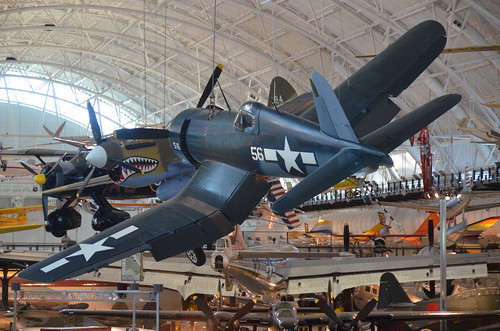
Steven F. Udvar-Hazy Center: Vought F4U-1D Corsair, with P-40 Warhawk in background

Check out these prototype produced in china images:


Steven F. Udvar-Hazy Center: Vought F4U-1D Corsair, with P-40 Warhawk in background
prototype made in china

Image by Chris Devers

Quoting Smithsonian National Air and Space Museum | Vought F4U-1D Corsair :


By V-J Day, September 2, 1945, Corsair pilots had amassed an 11:1 kill ratio against enemy aircraft. The aircraft’s distinctive inverted gull-wing style permitted ground clearance for the huge, 3-bladed Hamilton Standard Hydromatic propeller, which spanned far more than 4 meters (13 feet). The Pratt and Whitney R-2800 radial engine and Hydromatic propeller was the largest and one of the most potent engine-propeller combinations ever flown on a fighter aircraft.


Charles Lindbergh flew bombing missions in a Corsair with Marine Air Group 31 against Japanese strongholds in the Pacific in 1944. This airplane is painted in the colors and markings of the Corsair Sun Setter, a Marine close-support fighter assigned to the USS Essex in July 1944.


Transferred from the United States Navy.


Manufacturer:
Vought Aircraft Business


Date:

1940


Nation of Origin:

United States of America


Dimensions:

All round: 460 x 1020cm, 4037kg, 1250cm (15ft 1 1/8in. x 33ft 5 9/16in., 8900lb., 41ft 1/8in.)


Supplies:

All metal with fabric-covered wings behind the major spar.


Physical Description:

R-2800 radial air-cooled engine with 1,850 horsepower, turned a three-blade Hamilton Standard Hydromatic propeller with strong aluminum blades spanning 13 feet 1 inch wing bent gull-shaped on each sides of the fuselage.


• • • • •


Quoting Smithsonian National Air and Space Museum | Curtiss P-40E Warhawk (Kittyhawk IA):


Regardless of whether identified as the Warhawk, Tomahawk, or Kittyhawk, the Curtiss P-40 proved to be a productive, versatile fighter for the duration of the very first half of World War II. The shark-mouthed Tomahawks that Gen. Claire Chennault’s &quotFlying Tigers&quot flew in China against the Japanese stay amongst the most popular airplanes of the war. P-40E pilot Lt. Boyd D. Wagner became the very first American ace of Planet War II when he shot down six Japanese aircraft in the Philippines in mid-December 1941.


Curtiss-Wright constructed this airplane as Model 87-A3 and delivered it to Canada as a Kittyhawk I in 1941. It served till 1946 in No. 111 Squadron, Royal Canadian Air Force. U.S. Air Force personnel at Andrews Air Force Base restored it in 1975 to represent an aircraft of the 75th Fighter Squadron, 23rd Fighter Group, 14th Air Force.


Donated by the Exchange Club in Memory of Kellis Forbes.


Manufacturer:
Curtiss Aircraft Firm


Date:

1939


Nation of Origin:

United States of America


Dimensions:

Overall: 330 x 970cm, 2686kg, 1140cm (10ft 9 15/16in. x 31ft 9 7/8in., 5921.6lb., 37ft four 13/16in.)


Materials:

All-metal, semi-monocoque


Physical Description:

Single engine, single seat, fighter aircraft.


(Source from China rapid prototype company blog)

Wednesday, August 12, 2015

Lastest Chinese Speedy Prototyping News

Operating in an Era of Persistent Unmanned Aerial Surveillance

[i] Chinese organizations continue to create reconnaissance and armed UASs for export to emerging foreign markets.[ii], [iii] Earlier … [xix],[xx],[xxi], [xxii] The tiny size and agility of these UASs let them to evade conventional air defense systems …
Study much more on ISN


Hydrogenics&#39 (HYGS) CEO Daryl Wilson on Q2 2015 Results – Earnings Call Transcript

We continue to see marketplace in excess of 100 megawatts for this technologies currently identified and we anticipate a speedy climb in orders starting subsequent year. We have ….. I have made a number of trips there in current months and I&#39ve been really impressed …
Read more on Seeking Alpha


HTC and SHVR Partner for Shanghai Vive Jam, Road to VR Supports as Official

August 14th kicks of the SHVR Vive Jam, a collaboration amongst HTC and the Shanghai VR Meetup to bring teams from across China for a weekend of speedy prototyping space-scale VR experiences for the SteamVR platform. Road to VR signs on as the&nbsp…
Study more on Road to VR


(Source from China rapid prototype company blog)
Tuesday, August 11, 2015

Lastest Rapid Prototyping Service China News

Arms race goes hypersonic

In another, a prototype designed by Lockheed Martin blasted off like a rocket and streaked back by way of the atmosphere at far more than 20 times the speed of sound. China has reportedly tested its version over a lake in Inner Mongolia. And in February …
Read more on Politico


Operating in an Era of Persistent Unmanned Aerial Surveillance

The modest size and agility of these UASs enable them to evade classic air defense systems yet particular counter UAS systems are beginning to show progress beyond the prototype phase. Economic forecasters could dispute industrial UAS … Interestingly …
Read much more on CIMSEC


Honda Accessorizes with 3D Printing

Honda makers and sells cars around the planet, and customization is 1 of their solutions. Not long … Honda, which has utilised the technologies for prototyping because 2006, has fully embraced AM with the acquire of a Stratasys Object Eden500V, which …
Read more on Fast Ready Technology


(Source from China rapid prototype company blog)

Monday, August 10, 2015

Kalow keeps on developing

Kalow keeps on growing

In addition, they have secured contracts that make the business genuinely a worldwide factory. They function straight with organizations in China to build certain types of items. They have been sought out by startups because of the state-of-the-art production …
Read far more on Rutland Herald


The planet&#39s very first “unstealable” bike

The bike&#39s mechanical components are created in Taiwan the steel frame and fork in mainland China. Manufacturing has been entrusted to a specialist factory in Shanghai, where the founders are confident they will get a higher top quality solution. Even that wasn …
Read more on whnt.com


An additional death in Apple&#39s &#39Mordor&#39 – its Foxconn Chinese assembly plant

A single leapt to his death right after allegedly being roughed up by Foxconn security in their search for a misplaced Apple iPhone 4G prototype. In January 2012, a group of workers at a Foxconn factory in Wuhan threatened to jump off the … In December 2013 …
Read more on The Register


(Source from China rapid prototype company blog)

Saturday, August 8, 2015

Cool Prototype Machining China images

Some cool prototype machining china pictures:


The Soviet WWII Ground-Attack Aircraft Ilyushin Il-ten ‘Shturmovik’. Poland. 1945. Советский штурмовик Ил-ten. Польша 1945 г.
prototype machining china

Image by Peer.Gynt

DIGITALLY COMPOSED IMAGE

The original aircraft is exposed in Central AirForce Museim, Monino.


Ilyushin Il-10 (Cyrillic Илью́шин Ил-10, NATO reporting name: &quotBeast&quot) was a Soviet ground attack aircraft developed at the end of Globe War II by the Ilyushin building bureau. It was also license-constructed in Czechoslovakia by Avia as the Avia B-33.

Improvement


From the start off of Eastern Front combat in Globe War II, the Soviet Air Force (VVS) used the effective ground attack aircraft Ilyushin Il-two Sturmovik, powered by the Mikulin AM-38 inline engine. As the war progressed, the Soviets laid plans for that aircraft’s successor. The major purpose was to enhance speed and maneuverability at low altitudes, mostly to evade little-caliber anti-aircraft artillery, which was the major threat for ground attack aircraft, and to take away some of the Il-2’s faults. The most promising project was a modern day, light and maneuverable close assault aircraft, the Sukhoi Su-six, created by Pavel Sukhoi’s bureau from 1942. At the identical time, Sergei Ilyushin created a heavier aircraft, the VSh or Il-8 M-71, derived from the Il-two design, and on which it was partly based. Each projects were powered by the prototype M-71 radial engine, which did not enter production.


In 1943, Ilyushin started function on a new aircraft, Il-1, which was to be a 1- or 2-seat heavily armoured fighter-interceptor, meant mostly for fighting enemy bombers and transports. The Il-1 was similar to the Il-2 style, but was much more modern, compact, and powered with a new Mikulin engine: the AM-42. But the VVS gave up the thought of heavy armoured fighters, due to their low speed, which was not sufficient to intercept modern day bombers. As a outcome, Ilyushin decided to turn the Il-1 into a two-seat ground attack plane, with the designation changed to Il-ten in early 1944 (odd numbers were reserved for fighters).


At that time, Ilyushin also completed a prototype of a heavier ground attack plane, the Il-eight, using the very same engine, and much more closely derived from the Il-two. It carried a higher payload (1,000 kg/two,204 lb), but had lower efficiency than the Il-ten. Each varieties first flew in April 1944, the Il-10 proving drastically superior to the Il-8, which had poor handling. The Il-10 successfully passed trials in early June 1944.


The third competitor was a new variant of the Sukhoi Su-six, also powered by the AM-42 engine. After comparative tests, the Il-10 was regarded as the winner and was selected as the new ground attack plane, despite some opinions that the Su-six was a better aircraft, notwithstanding inferior efficiency and payload, with better gun armament. Notably, the Su-six prototype was tested with maximum payload, causing lowered functionality, while the Il-ten was tested with typical payload. Some benefits of the Il-ten came from its technical similarity to the Il-two.

On 23 August 1944 the Il-ten was ordered into serial production by choice of the State Defense Committee (GKO) as a new ground attack plane.[five] Its armament was initially similar to late model Il-2s, with two 23 mm VYa-23 cannons and two ShKAS machine guns in the wings, and a 12.7 mm UBT machine gun for a rear gunner, and 400 kg, or a maximum 600 kg of bombs. As opposed to the Il-2 and Su-6, it was not initially meant to carry rockets.


Production of the Il-10 started in Kuybyshev’s factories No. 1 and No. 18. The first production aircraft flew on 27 September 1944 and 99 aircraft were created by the finish of 1944. Early series aircraft showed teething difficulties, most notably engine faults and fires. Most troubles were eliminated by 1945. Aircraft made from April 1945 onwards could carry four unguided air-to ground rockets. Aircraft made from 1947 onwards were fitted with stronger armament, consisting of 4 23 mm NS-23 cannons in the wings and a 20 mm cannon for the rear gunner. Il-ten production ended in 1949, soon after a run of four,600 aircraft in the last two years, they have been developed in factory No. 64.


Among 1945 and 1947, 280 UIl-2 or Il-10U trainer variants had been produced. The rear gunner’ cockpit was replaced with a longer instructor’s cockpit with dual controls. Its efficiency and construction were related to the combat variant apart from armament, which was lowered to two cannons, two rockets, and a regular load of bombs.


In 1951, the Czechoslovak firm Avia secured a license to make Il-10s, with the designation B-33. The first one flew on 26 December 1951. Initially, their engines were Soviet-built. From 1952 onwards the engines had been also produced in Czechoslovakia as the M-42. Besides the combat variant, a Czechoslovak trainer variant also entered service under the designation CB-33. In total, 1,200 B-33s were constructed by 1956.

In 1951, due to expertise acquired during the Korean War, the Soviet Air Force decided that propeller ground attack aircraft may well nonetheless be valuable, and decided to renew Il-ten production in a modified variant, the Il-10M, which very first flew on two July 1951. It was a bit longer, with a wider wingspan, and larger control surfaces, with a fin beneath the tail. 4 of the more lately developed NR-23 cannons were mounted in the wings, even though the payload stayed the exact same, and newer navigation equipment was installed, providing partial all-weather capability. Speed decreased slightly, but handling enhanced. In between 1953 and 1954, 146 Il-10Ms were produced, all but 10 in Rostov-on-Don’s factory No.168.


In total, six,166 of all Il-10 variants were produced, including those constructed under license.


Trials of Il-10s mounted with much more effective AM-43 and AM-45 engines took place, but proved unsuccessful. Ilyushin next designed a lighter close support aircraft, the Il-16, with improved performance and equivalent armament. It first flew on ten June 1945. A brief run entered production, but the project was cancelled in 1946 due to the AM-43 engine’s unreliability.

Technical description


The airframe featured a single engine, two-seat, monoplane, with a metal-covered frame. The plane was hugely armoured. The front portion of the fuselage, with the cockpit, was a shell of armour plates 4–8 mm thick the thickest, eight mm, were under the engine, there was no armour above the engine. The front windshield was produced of armour glass 64 mm (two.5 in) thick. Also armoured was: a roof above the pilot, side window frames in the pilot’s cab, a wall in between crew seats, and a rear wall behind the cab. Total armour weight was 994 kg, such as its attachment. The wing consisted of a central section, with two bomb bays, and two detachable outer panels. The undercarriage was retractable. The major wheels folded to the rear right after rotating by 86°.


Early Il-10s had two 23 mm VYa-23 autocannons (150 rounds every) and two 7.62 mm ShKAS machine guns (750 rounds each and every) fixed in wings, and a 12.7 mm UBT machine gun in a rear gunner station BU-8, with 150 rounds. The horizontal angle of the rear machine gun field of fire was 100°. From 1947, the aircraft were armed with 4 NS-23 23 mm cannons in the wings (150 rounds every) and 20 mm B-20T cannon in a rear gunner station BU-9 (150 rounds). The IL-10M had 4 23 mm NR-23 cannons in wings (150 rounds each and every) and 20 mm B-20EN cannon in a rear gunner station BU-9M (150 rounds). Avia B-33 had four 23 mm NS-23RM cannons in wings and 20 mm B-20ET cannon in a rear gunner station BU-9M.


The standard bomb load was 400 kg, maximum load was 600 kg. This could be small fragmentation or anti-tank bomblets, place in bomb bays, or 4 50–100 kg bombs in bomb bays and externally below wings, or two 200–250 kg bombs attached under wings. Little bomblets had been put straight on bomb bay floors, in piles. A typical load was 182 (maximum 200) two kg AO-2,5-2 fragmentation bombs, or 144 PTAB-two,five-1,five anti-tnk HEAT bombs. Apart from bombs, four unguided rockets RS-82 or RS-132 could be carried on rail launchers below wings. Avia B-33s have been also fitted to carry other rocket kinds. Late Soviet aircraft could carry ORO-82 and ORO-132 tube launchers. In the tail section was a DAG-10 launcher with ten anti-aircraft or anti-personnel grenades AG-two (right after becoming thrown, they would fall with parachutes and then burst, but were not extensively used in practice).


The Il-ten engine was a 12-cylinder inline V engine Mikulin AM-42, liquid-cooled, energy: 1,770 hp continuous, takeoff power: two,000 hp. 3-blade propeller AV-5L-24 of three.six m diameter. Two fuel tanks in the fuselage: upper 440 l more than engine, ahead of the cockpit, and decrease tank of 290 l under the cockpit. The aircraft had a radio set and a camera AFA-1M in a rear section of the fuselage.

Operational history


In October 1944, the Il-ten initial entered service with training units in the Soviet Air Force. In January 1945, the very first Il-10 combat unit entered service with the 78th Guards Assault Aviation Regiment, but it did not enter action due to unfinished coaching. Even so, 3 other Il-10 units managed to take portion in the final combat actions of World War II in Europe. They had been the 571st Assault Aviation Regiment (from 15 April 1945), the 108th Guards Assault Aviation Regiment (from 16 April 1945), and the 118th Guards Assault Aviation Regiment (on 8 Might 1945). About a dozen aircraft had been destroyed by flak or engine breakdowns, but the Il-ten appeared to be a profitable design and style. One particular was shot down by an Fw 190 fighter, but a crew of the 118th Regiment shot down yet another Fw 190 and almost certainly broken another. On ten Might 1945, the day following the official Soviet end of the war, (Victory Day), there have been 120 serviceable Il-10s in Soviet Air Force combat units, and 26 disabled ones.


Right after the USSR reentered the war against the Empire of Japan, with the invasion of Manchuria, from 9 August 1945, a single Il-ten unit, the 26th Assault Aviation Regiment of the Pacific Navy Aviation, was employed in combat in the Korean Peninsula, attacking Japanese ships in Rasin and rail transports.


After the war, until the early 1950s, the Il-10 was a simple Soviet ground attack aircraft. It was withdrawn from service in 1956. At the exact same time, perform on new jet-powered devoted armoured ground attack planes (like the Il-40) was canceled, and the Soviets turned to multipurpose fighter-bomber aviation. The Il-10 and its licensed variant, the Avia B-33, became a simple ground attack plane of the Warsaw Pact nations. From 1949 to 1959, the Polish Air Force utilized 120 Il-10s (like 24 UIl-ten), and 281 B-33s. In Poland, the B-33 was modified to carry 400 l fuel tanks beneath its wings. From 1950 to 1960, Czechoslovakia used 86 Il-10s, like six UIl-10s, and about 600 B-33s. From 1949 to 1956, the Hungarian Air Force utilized 159 Il-10s and B-33s. From 1950 to 1960, the Romanian Air Force utilized 14 Il-10s and 156 B-33s. Bulgaria also employed these aircraft.


In the late 1940s, 93 Il-ten and UIl-10s were given to North Korea. They were then utilised in the 57th Assault Aviation Regiment for the duration of the early phase of the Korean War. They were initially utilised with accomplishment against the weak anti-aircraft defense of South Korean forces, but then they suffered heavy losses in encounters against the USAAF fighters and had been bombed on the ground themselves. Soon after a number of weeks, about 20 remained. In the summer time of 1950, North Korea received much more aircraft from the USSR. The North Koreans claimed to sink a warship on 22 August 1950 with Il-10s, but it was never ever confirmed.


From 1950, Il-10s had been employed by the People’s Republic of China, in two regiments of an assault aviation division. They had been utilised in combat throughout a conflict with the Republic of China, (Taiwan), over border islands in January 1955. They remained in service till 1972. From 1957, Yemen used 24 B-33s.


General characteristics

Crew: two, pilot and gunner

Length: 11.12 m (36 ft 6 in)

Wingspan: 13.40 m (44 ft)

Height: 4.10 m (13 ft 5 in)

Wing location: 30 m2 (322.9)

Empty weight: 4,675 kg (ten,305 lb)

Loaded weight: 6,345 kg (14,000 lb)

Max. takeoff weight: 6,537 kg (14,410)

Powerplant: 1 × Mikulin AM-42 liquid-cooled V-12, 1,320 Kw (1,770 hp)


Performance

Maximum speed: 550 km/h at 2,700 m 500 km/h at ground level (340 mph at 8,860 ft / 310 mph)

Variety: 800 km (500 mi)

Service ceiling: 4,000 m (13,123 ft)

Wing loading: 211 kg/m2 (43.two lb/ft2)


Armament


two × 23 mm Nudelman-Suranov NS-23 auto cannons in wings, 150 rounds per gun

two × 7.62 mm ShKAS machine guns in wings, 750 rounds per gun

1 × 12.7 mm UBST machine gun in the BU-9 rear gunner station, 190 rounds

Up to 600 kg (1,320 lb) of a variety of weapons as described in the text.


Wikipedia


(Source from China rapid prototype company blog)

Thursday, August 6, 2015

3D Printing: The Stories We Didn&#39t Cover This Week: August 1, 2015

3D Printing: The Stories We Didn&#39t Cover This Week: August 1, 2015

Also, on the business side of issues, a report has been released suggesting that China&#39s 3D printing market place could attain a whopping $ 1.6 billion by 2016. But not all 3D printing organization news is very good news this week: Munich-primarily based Alphaform AG has …
Study a lot more on 3DPrint.com


Accenture buys PacificLink as digital marketing solutions in China take off

It recently purchased US technology studio Chaotic Moon, known for its speedy prototyping of digital items for major brands, such as the Walt Disney Organization. Other acquisitions incorporate Australian digital agency Reactive Media, British design …
Read much more on South China Morning Post (subscription)


(Source from China rapid prototype company blog)

Wednesday, August 5, 2015

Lastest Chinese Prototype Manufacturing News

Much more disruption ahead: Wireless sensors that can be printed at home

Thinfilm&#39s smart prototype of Diageo&#39s Johnnie Walker Blue Label whiskey bottle? It was equipped with a printed NFC sensor tag supported by Thinfilm&#39s new OpenSense technology to track the bottle. The consumer taps his or her smartphone to the tag on …
Study far more on Computerworld


Stratasys Reports Second Quarter 2015 Financial Final results

Announced a multi-year collaboration with the Kangshua Group that includes delivering up to 1,000 Solidscape high precision 3D printers to equip numerous new service bureaus and innovation centers in China as properly as the opening of a manufacturing …
Study far more on MarketWatch


IBM Announces Breakthrough In Chip Technology

According to The Wall Street Journal: &quotIBM&#39s chip prototypes, which rely on a lengthy-awaited breed of new production tools, don&#39t prove its new technologies will be sensible in higher-volume production, analysts said. But the developments could assist IBM and …
Read far more on NPR


(Source from China rapid prototype company blog)

Tuesday, August 4, 2015

Why it is challenging for hardware companies to survive &amp grow in India&#39s startup ...

Why it is tough for hardware organizations to survive &amp develop in India&#39s startup

Benjamin Joffe, general partner of HAX, China&#39s largest-hardware accelerator, stated, &quotThe formula we use now is investigation and improvement in the house nation, advanced prototyping and manufacturing in Shenzhen, then sales in the US, property marketplace,&nbsp…
Read much more on Financial Instances


Cambria County employer of blind, handicapped is part of energy&#39s transformation

The organization&#39s Ebensburg branch is a large manufacturing space where metal wire gets chopped, bent, welded and dipped in plastic, generating millions of industrial hangers a year. For much more than 30 years, most of … The organization has a good chunk …
Read much more on Pittsburgh Post-Gazette


(Source from China rapid prototype company blog)

Monday, August 3, 2015

Nice Speedy Prototyping Rates photographs

Some cool fast prototyping costs photos:


Mirai Suenaga Doll
rapid prototyping prices

Image by Danny Choo

I’ve documented the doll production approach up till now in the following posts – even though they are certain to dolls, you can apply the understanding to make your personal figures and wot not.


#Rapid Prototyping and You


#How To Mass Make Your Personal Merchandise


For those who cant be bothered to go by way of these posts, right here is a extremely very rough breakdown (skipping a few processes) of what you need to make your own dolls (or other items).

Use Google Sensei to discover how to use 3D application like I did – if you cant afford the value tag of 3D application then there are free of charge decent options like Blender.


In our case, we used ZBrush for the modeling and tweaking using 3D Max.


Prep information for 3D printing.


Print 3D Information.


Make silicon molds from 3D printed data.


Make wax clone from silicone mold.


Electroform the wax clone to make the copper mold for mass production.


Pour soft vinyl into the molds to make the doll parts.


Cut off flash and assemble doll.


Make optical eyes.


Do the makeup.


Play with Mirai.


Aim unlocked – proceed to boss level.


If you want to make your personal merchandise then commence consulting with Google Sensei – its totally free. Then once you are armed with expertise, you can use that to commence implementing your concepts.


If you want to generate your items in Japan then I will hook you up with the individuals that you want to know who can oversee the production for you. If you are confident in your language expertise and know enough about the production processes then I’ll introduce the factories to you.


If you dont have the cash to cover production then start off with what I did and work in a restaurant to save up. Stop giving oneself excuses and just do it.


View more at www.dannychoo.com/post/en/26928/Mirai+Suenaga+Doll.html


3D Printed cake
rapid prototyping prices

Image by whosdadog

A 3D Printed cake that was printed by Shapeways. It is 9x9x6.5cm. It is hollow with an open bottom. They have actually wonderful prices for Speedy Prototyping. Check them out! www.shapeways.com. If you by chance want to purchase one for oneself, check out the model page The render of it is here: www.flickr.com/pictures/whosdadog/3529143351/


(Source from China rapid prototype company blog)